Your AI is secretly failing chemistry because it cannot explain why
The quiet failure hiding inside your best model
We have a problem. Most AI models are brilliant at pattern matching but completely blind to causality.
Look. In a modern lab, this is not an academic debate. It is a daily operational risk.
You ask your system to predict the yield of a complex reaction. It gives you a number.
But it cannot tell you why that specific intermediate formed or which solvent variable mattered most.
This is the black box problem. And for chemists working on new drug candidates, it is terrifying.
A recent paper in Chemical Reviews flips the narrative on its head. It argues that chemistry is saving AI.
Nitesh Chawla from the University of Notre Dame explains that organic chemistry demands reasoning.
It forces machines to move beyond simple predictions into interpretable scientific logic. That is a huge leap.
Why scale is not the answer for complex molecules
The industry standard approach to improving AI has been brute force. Throw more compute at it.
Feed it massive datasets and hope the patterns emerge. This works for image recognition.
But organic chemistry does not play by those rules. High-quality experimental data is scarce.
Data comes from disparate sources in messy formats. You cannot just scrape the web for perfect answers.
This scarcity forces researchers to think differently. They must incorporate prior scientific knowledge directly.
Chawla notes that extracting reliable info from imperfect evidence requires critical thinking about representation.
It is a constraint that actually improves the final product. Less data means more rigor.
The role of limited evidence in model training
When data is thin, AI must rely on mechanistic understanding rather than just statistical correlation.
This is where the real innovation happens. The system learns to respect chemical laws.
It stops being a black box and starts acting like a reasoned scientific assistant. That is the goal.

How this changes drug discovery for the better
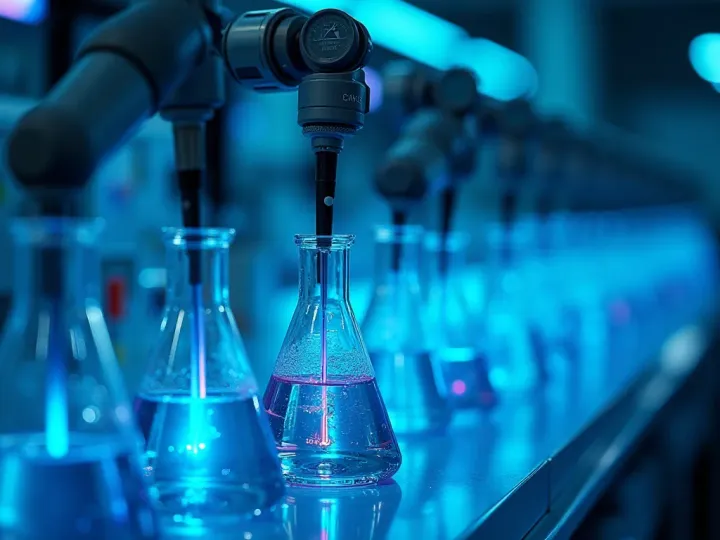
Think about self-driving laboratories. These are automated systems that run experiments with minimal human input.
If these labs rely on opaque AI models, the results are unusable. You need to know why a reaction worked.
The Notre Dame team argues that chemistry provides the perfect testing ground for this transparency.
We are moving toward a hybrid future. Statistical learning meets symbolic knowledge and human expertise.
This means faster validation of potential therapeutics. It means safer materials and better outcomes.
The shift from prediction to explanation in labs
Chemists want mechanisms. They need confidence intervals that reflect real uncertainty.
When AI can explain its reasoning, it becomes a true partner in the discovery process.
This is not just about better software. It is about a fundamental shift in scientific methodology.
What this means for your research workflow right now
If you are working with natural products or polymers, this development is directly relevant to your data.
You are likely dealing with limited datasets and complex interactions. The new approach helps here.
Instead of relying on generic large language models, look for tools that incorporate chemical priors.
This reduces the risk of statistical ghosts. It ensures your findings are grounded in physical reality.
For those interested in how data integrity affects broader projects, consider reading about the silent failure hiding in your polymer research data.
The connection is clear. Better AI in chemistry leads to more reliable data across all fields.
Practical steps for adopting explainable AI tools
Start by auditing your current models. Can they provide a causal explanation for their outputs?
If the answer is no, you are flying blind. Look for systems that respect stoichiometry and thermodynamics.
This level of detail is what separates a useful tool from a dangerous guess.

The human element that machines cannot replicate yet
Despite the advances, we are not replacing chemists. We are augmenting them.
Olaf Wiest points out that asking a model to reason forces it to move beyond black box predictions.
But human intuition still drives the hypothesis formation. The AI just speeds up the testing phase.
This partnership is where the real breakthroughs happen. It balances creativity with rigor.
If you are curious about the broader implications of AI in science communication, see how this habit is breaking science communication.
Why intuition remains the key driver of discovery
Machines can process data faster than any human ever could. They do not dream up new concepts.
They need a direction. A question. A hunch from an experienced researcher in the room.
This is why the hybrid model Chawla describes is so important. It keeps humans in the loop.

Looking ahead to a more transparent scientific future
The trajectory is clear. We are moving toward AI that explains its work.
This transparency will make scientific results more reproducible and trustworthy. That is huge.
It also means that negative results can be analyzed more deeply. Why did it fail?
Currently, failures are often discarded as noise. With better reasoning AI, they become data points.
This changes how we view progress. It is not just about hits. It is about understanding the whole landscape.
The long term impact on global health innovation
When we can trust AI to explain chemical reactions, drug development accelerates significantly.
We will see new treatments for rare diseases that were previously too expensive to pursue.
The efficiency gains from better AI are real. They save time and money in every step of the pipeline.
This is not science fiction. It is happening in labs right now. The future of health relies on it.
Final thoughts on the chemistry AI partnership
We often talk about how AI is changing science. But here, chemistry is changing AI.
The constraints of organic molecules force a level of rigor that pure data science lacks.
This is why the work from Notre Dame matters. It bridges two worlds that are usually separate.
If you want to understand the foundation of why this research matters so much, read what is scientific research and why does it matter.
The result is a more reliable, honest, and effective scientific tool. That is the real win.
We are building a system that thinks like a chemist. And that is exactly what we need.

Comments ()