Best Scientific Research Papers
The Best Health Science Papers to Read and How to Judge Them

The best health science reading is not one paper but a short, themed shortlist: rigorous natural-product studies, clean organic-chemistry methods papers, and polymer work with real clinical relevance. Judge each by its methods and replication record rather than its journal name or press coverage, and read two or three deeply instead of skimming dozens. What the search engine returns for the phrase is mostly something else.
Citation-based league tables measure institutional output, not the quality of any single paper. One widely cited ranking draws on a graph of 105M citations received by 3.23M academic papers produced by 4,114 universities, which tells you how much a faculty publishes and is cited in aggregate. It cannot tell you whether the study in front of you was blinded, preregistered or replicated.
Degree and tuition lists answer a student's question, not a clinician's or a researcher's. They rank programmes by entry requirements and cost, so a strong entry there says nothing about the evidence behind a treatment.
Podcasts are useful commentary, but they are secondary sources, one step removed from the data. A host summarising a trial has already selected, compressed and interpreted it; the paper lets you check the numbers yourself.
What Makes a Health Science Paper Worth Your Time
Start with the methods section, not the abstract. Ask a simple question: could a competent researcher in another lab repeat this with the same materials and get a comparable answer? If the paper never states reagent grades, instrument settings, inclusion criteria or how raw data were handled, the result cannot be checked, and an unchecked result is a claim rather than a finding.
A single striking result is the least reliable thing a paper can offer. Look instead for work that sits on top of earlier findings, cites independent groups reaching similar conclusions, or has itself been repeated. One clean experiment in one lab is a hypothesis with good presentation; convergence across separate teams is what moves a field. When you read about a natural remedy, the same test applies to the evidence behind natural eczema remedies as to any drug trial.
Then ask what the study actually measured. A biomarker that moves in a dish, a surrogate endpoint that correlates with disease, and a hard outcome that patients feel are three different things, and papers often blur them. Before you invest an hour, find the sentence that names the primary outcome and decide whether it is the one you or a clinician would care about.
Journal prestige is a weak signal. A famous name on the cover tells you about editorial taste and the authors' networks more than about the strength of the work. Sample size, pre-registration, accessible data and honest reporting of limitations tell you far more, and you can check all four in the time it takes to skim the methods and the discussion. Judge the paper, not the masthead.

Natural Products Research That Earns a Second Read
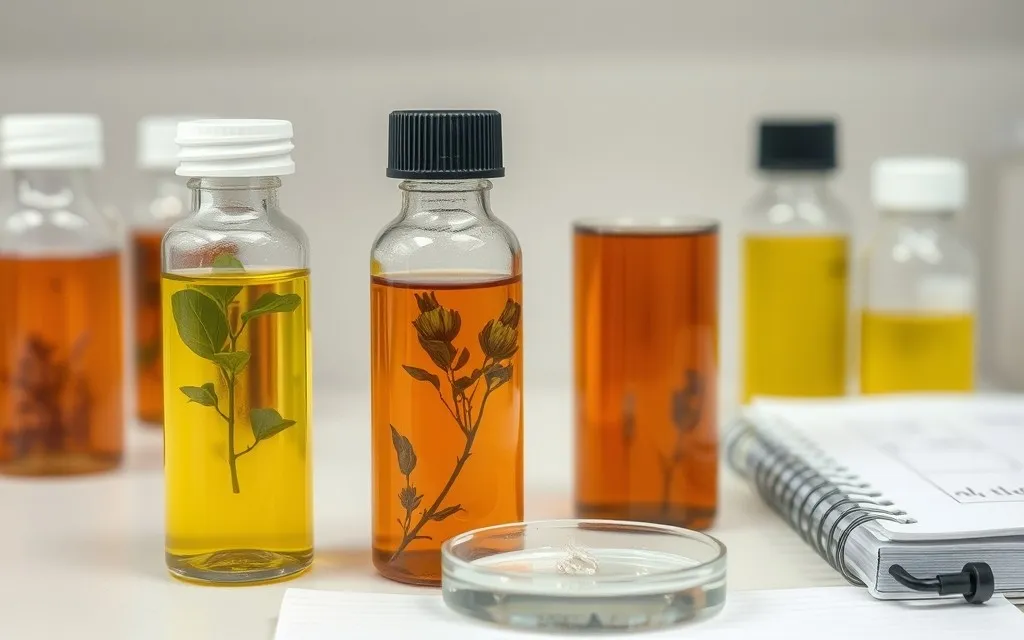
A natural-product paper lives or dies on its provenance. The authors should name the species with its full botanical name, say which part was used, where it was collected and when, and describe the extraction solvent, temperature and duration. Vague phrasing such as "a local medicinal plant" or "a traditional preparation" is a reason to close the tab, because nobody, including you, can repeat the work.
Chemical characterisation is the second filter. Crude extracts contain hundreds of compounds, and activity in a crude extract tells you almost nothing about which molecule did the work. Strong papers isolate fractions, test them, then confirm the structure of the active compound with spectroscopic data and report its concentration in the original extract. If the paper stops at "the ethanol extract was active", it has found a phenomenon, not a lead.
Dose matters. A single high concentration that shows an effect is close to meaningless, since almost anything kills cells or inhibits an enzyme at enough of a dose. Look for a dose-response curve across several concentrations, with a stated endpoint and a comparison to a positive control run under the same conditions.
Activity without a plausible mechanism is a hypothesis wearing a result's clothing.
Finally, ask whether the authors propose a mechanism and test any part of it. A paper that reports an effect and then gestures at antioxidant capacity has explained nothing. One that identifies the target, or at least rules out the obvious confounders, has given you something to build on.
Organic Chemistry and Polymer Papers With Clinical Relevance
A synthesis paper becomes useful to health readers when it reports the things that decide whether a compound could ever be made outside a glovebox. Honest yields, measured purity and a note on whether the route scales are the difference between a curiosity and a candidate. When those numbers are vague or absent, treat the structure as a proposal rather than a result.
Polymer papers carry a second obligation. The material has to be described in the conditions it will meet: how it degrades, over what timescale, and what it releases as it breaks down. A polymer characterised only in dry form tells you nothing about behaviour in tissue or in a wet, warm, enzyme-rich environment. Look for degradation data and a biological test, not just a spectrum.
The clearest signal of clinical relevance is a stated route to translation. That might be a device, a delivery system, or a validated assay the authors actually ran. Ask what the next experiment would be and whether the paper names it. Work that stops at a structure with no function data is early-stage, and reading it as early-stage keeps your expectations calibrated. The same discipline applies to how you separate real science from expensive guessing in any field.
Apply three checks in order: are the yields and purity credible, is degradation described in biological conditions, and is there a named path toward an application? A paper that passes all three earns a second read even if the chemistry is unglamorous.
The Five Benchmarks Reviewers Use and You Can Borrow
Health education already has a vocabulary for judging institutions, but it does not transfer to judging research. One widely used set of criteria covers accreditation and program recognition, licensing exam pass rates, clinical training opportunities, research opportunities and funding, and residency match rates. These are institutional signals only: they describe schools and programs, not papers. To judge a paper, use paper-level checks instead, such as blinding, preregistration, sample size, and data availability.
Accreditation, pass rates and match rates are institutional signals. They tell you whether a school or department meets external standards and whether its graduates get placed. They say nothing about the quality of any single study, so use them to decide how much benefit of the doubt a group deserves, not to score an individual output.
Clinical and research opportunities answer a sharper question: can this group actually run a study to completion? Access to patients, equipment and collaborators is what separates a protocol from a finished dataset. When a paper reports a large trial, the infrastructure behind it is visible in the methods.
Funding and training environment shape the size and rigour of the work in front of you. Well-supported groups can afford proper controls, longer follow-up and independent analysis. Before trusting one paper, check the group's track record using these same benchmarks, as outlined in this overview of evaluation criteria for health science programs.
How to Read Three Papers a Week Without Falling Behind
A weekly routine survives only if it is shorter than the time you can actually protect. Block one hour, three times a week, and treat each slot as one paper. Start with the abstract, then go straight to the figures and tables. If the figures do not support the sentence in the abstract, stop there and move on; the methods only deserve your time once the data have earned it.
Keep a single line per paper: the claim in your own words, plus one word on evidence strength, such as strong, suggestive or thin. A shared note file of forty such lines is worth more than forty saved PDFs you never reopen. When a claim starts appearing across several lines, that is your signal to read the full methods properly.
Follow a handful of research groups rather than a broad journal table of contents. Ten groups publishing steadily will fill three slots a week without drowning you. Pair each primary paper with one expert commentary to catch the context you missed, whether a specialist podcast episode or a short written appraisal. Commentary comes in many lengths, from brief episodes to long-form discussions, so match the commentary to the slot you have.
Read widely enough and you will meet papers on unexpected chemistry, such as the fungal enzyme work on antifungals, which rewards the same habit: judge the figures before the prose.
Tracking Research Groups by Author
Dutch laboratories keep showing up in the two areas worth following most closely: natural-product chemistry and polymer biomaterials. That means the local literature is not a consolation prize for readers who cannot access the big journals. It is a stream of work you can track directly, author by author, group by group.
European institutional rankings can point you toward departments with depth, and the top of those tables tends to be occupied by names like University College London and Oxford, which hold the first two places in Europe for health science. Use such tables to find a department worth watching. They say nothing about whether any individual paper from it is sound.
Proximity buys you something no ranking can. When a paper comes from a group you can reach, the follow-up question about a control, a sample size, or an unexplained figure is an email rather than a dead end. That exchange often teaches more than the paper did.
Keep national origin in its proper place. It is a convenience for networking and for finding seminars within cycling distance, not a quality signal. A Dutch affiliation earns a paper exactly as much trust as any other, which is to say none until the methods hold up.
Frequently Asked Questions
How can I tell if a health science paper has been replicated?
Check whether later papers cite the original as a direct replication, whether independent groups report similar results, and look for systematic reviews or meta-analyses that pool repeated attempts. These signals help you judge whether a finding was tested independently rather than only cited in passing.
Are preprints worth reading before peer review?
Yes, preprints are worth reading, but treat them as early signals rather than settled findings. They let you see emerging work months before journal publication, yet they have not passed peer review, so weigh their methods against the same benchmarks you would apply to a published paper.
How many papers should I read each week to stay current?
Three papers a week is a workable target for staying current without falling behind. Spacing them across the week and choosing by relevance rather than journal prestige keeps the habit sustainable, and the five reviewer benchmarks help you decide quickly which papers deserve a full read.
Does the journal's impact factor tell me anything useful about a single paper?
The journal impact factor says little about one paper, because it reflects average citation patterns across a whole journal. Judge the paper itself using paper-level signals—sample size, preregistration, accessible data, reported limitations, and replication record—rather than borrowing the journal's reputation as a proxy for quality.