The Fungal Enzyme Trick That Turns Toxic Antifungals Into Designer Drugs
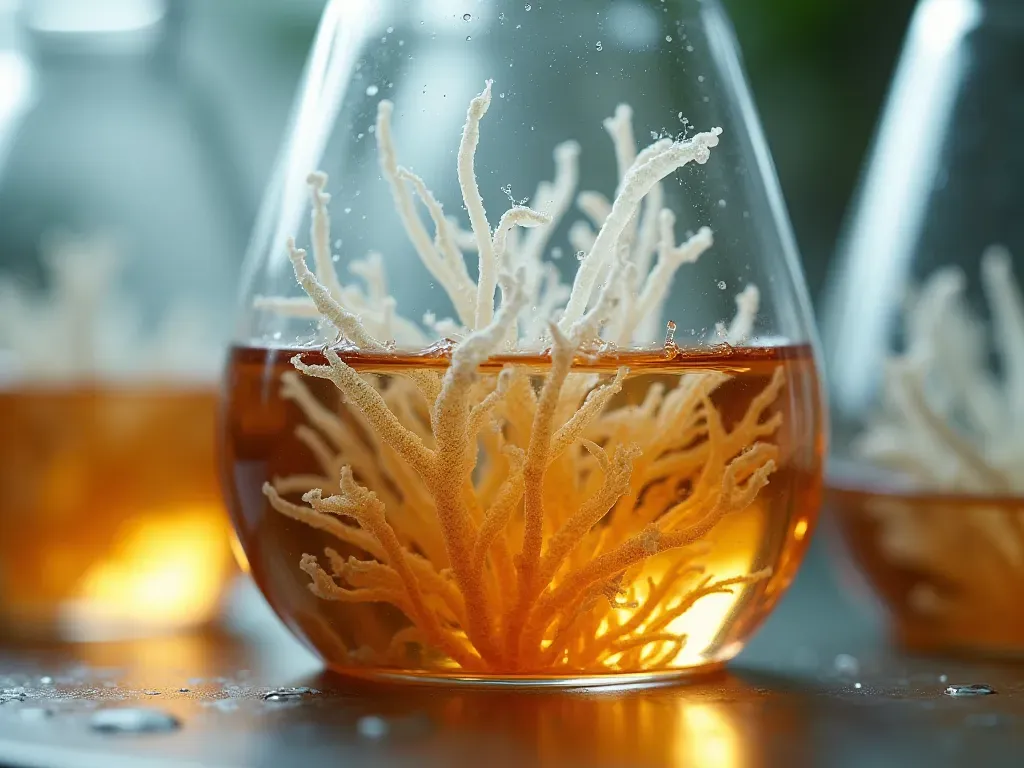
The Uncomfortable Truth About Toxic Drugs
We love a good miracle cure. But polyene antifungals? Messy, toxic, and brutally hard to synthesize in the lab.
For decades, scientists let nature do the heavy lifting. We just pulled these molecules out of fungi and hoped for the best.
Here's the thing, though. That approach hits a wall fast. Limited quantities, and side effects that keep patients in hospital beds for days.
What struck me was the sheer stubbornness of these molecules. They refuse to be tamed by traditional organic chemistry.
So what happens when we stop forcing nature's hand and start teaching it new tricks? That is where the real story begins.
A Breakthrough in Biosynthetic Tailoring
Mirza et al. published a study in Nature Chemical Biology that changed the game completely. This is not just another tweak to an existing process.
They showed we can tailor biosynthetic enzymes directly. Think of it like editing a recipe while the chef is still cooking.
Instead of one static molecule, we now have an engineerable scaffold. That opens the door to entirely new antifungal leads.
And it gets better. These modifications can lead to unexpected mechanisms of action we never saw in the wild.
Why This Changes More Than People Think
Most people file this away as a niche win for chemists. I honestly think it reshapes how we approach drug discovery entirely.
If you are tracking how the next antibiotic might be grown in a wheat field, this is the same underlying logic applied to fungi.
We are moving from hunting for treasures in the ground to building them piece by piece. That is a massive shift in scientific mindset.
The Broader Landscape of Natural Products Research
This paper does not exist in a vacuum. It sits alongside other major breakthroughs in the Nature Portfolio.
Take the work on automated operon refactoring. Researchers are using AI to streamline how we discover new biosynthetic gene clusters.
If you are interested in how AI agents just solved the hardest problem in science, this automation is a key part of that puzzle.
Then there is the fascinating work on nematodes. A specific enzyme assembly line controls developmental arrests in these tiny worms.
Different studies, one clear trend. We are starting to understand the deep logic behind how life creates complex molecules.
Connecting the Dots Across Disciplines
Look at the recent findings on colibactin in honeybees. A gut symbiont uses this natural product to defend against pathogens.
It is a beautiful example of nature's own quality control system. We can learn so much from these biological interactions.
Even the work on terpene synthases shows how we can reprogram enzyme selectivity. Pure molecular engineering in action.
Genetics, chemistry, and biology are converging in ways that were unimaginable a decade ago. And the pace is accelerating.
Implications for Health Sciences and Beyond
For the Dutch scientific community, this is particularly relevant. The country has a strong tradition in health innovation.
Researchers here are well-positioned to translate these biosynthetic insights into practical medical applications for patients.
If you are looking at the one question that actually matters in health research, this ability to design molecules is central.
We are not just finding cures. We are building them from scratch, with unprecedented precision and control.
The Future of Antifungal Therapies
Polyenes will likely remain a cornerstone of treatment. But the next generation will be safer and more effective.
Remove the dose-limiting toxicity, and we can treat patients who were previously unsuitable for these drugs. That is huge.
Imagine fungal infections managed with the same ease as bacterial ones. We are getting closer to that reality.
Not science fiction. Just the logical next step in a long line of chemical and biological innovation.
What This Means for Researchers in the Netherlands
The local scientific ecosystem is buzzing with this kind of work. It fits perfectly into the national focus on health science.
Students and industry professionals should pay close attention to these biosynthetic pathways. They represent the future of drug design.
The barrier to entry is high, but the potential impact on public health is equally significant. This is where careers are made.
Staying Ahead of the Curve
Reading papers like this one is essential. It helps you understand the practical applications of theoretical chemistry.
We keep seeing how raw data transforms into real-world solutions when interpreted correctly by skilled minds.
Your mileage may vary depending on your specific field. But the principles of molecular engineering are universal.
So keep reading. Keep asking questions. The next breakthrough might be hiding in the footnotes of your current project.

Comments ()