Your Organic Chemistry Professor Is Actually Lying To You About Why You Fail

The Silent Killer In Your Study Notes
I watched a brilliant student lose her entire semester last week. Perfect attendance. Neat notes. She still bombed the midterm.
Her mistake wasn't math. It was a cognitive trap every premed student walks straight into. We call it pattern matching.
Most students treat organic chemistry like a giant vocabulary list. Reactant A plus reagent B equals product C. Memorize and repeat.
That works perfectly — until the professor tweaks one tiny detail. Then your memory fails and panic floods in.
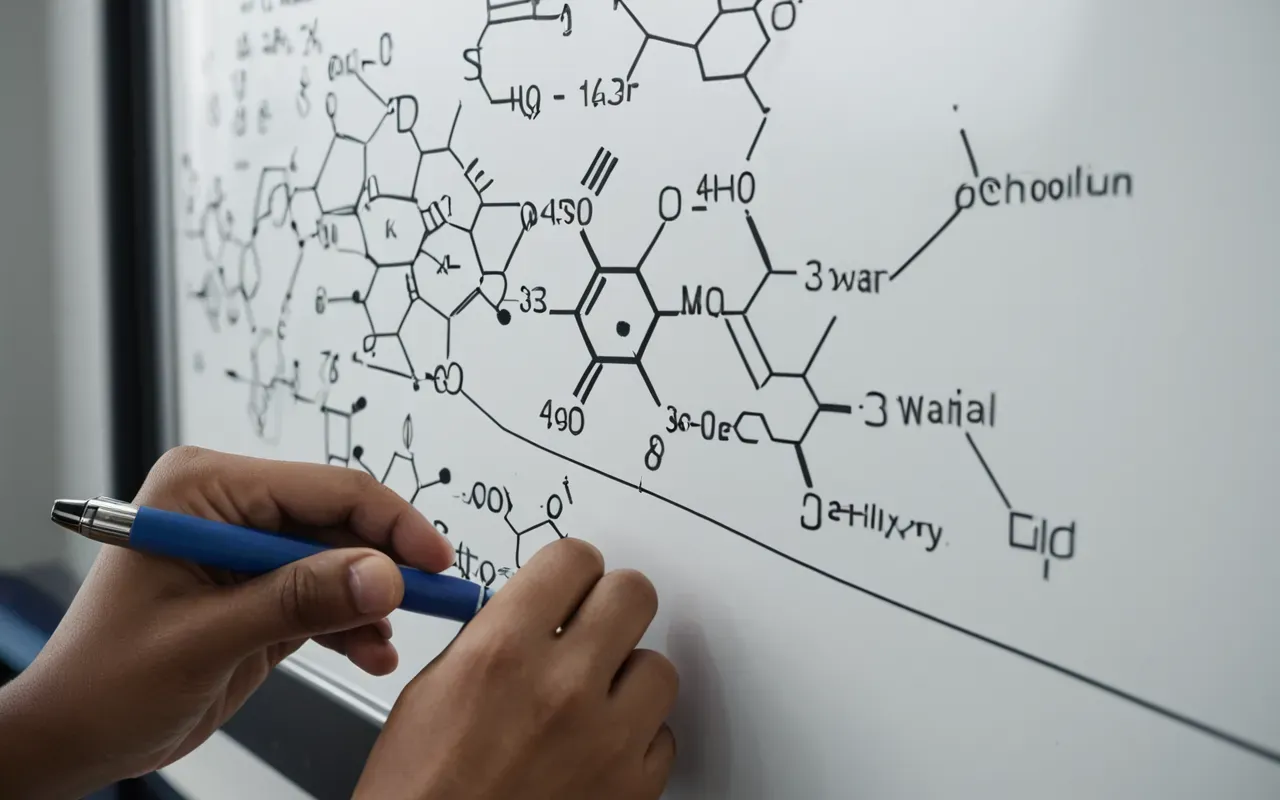
Why Memorization Is A Dangerous Trap
Take the alkene hydration example. Water plus acid turns a double bond into an alcohol.
A student who memorized this sees the acid and instantly writes down the alcohol product. They never ask why.
But what if there's no acid? What if a peroxide shows up instead? The product flips completely.
If you only memorized the first case, you're dead in the water. There's no logic to guide your hand.
The Pizza Ingredient Error
Imagine making a pizza with five mushrooms and three peppers. You can't magically pull six mushrooms out of thin air.
Atoms behave the same way in reactions. Ten carbons in your starting materials means ten carbons in your product. No exceptions.
Yet students constantly draw products with missing or extra atoms. Basic bookkeeping failure. It costs grades every single semester.

The Electron Inventory System That Works
Here's the fix. Stop looking at atoms first. Look at the electrons.
Every reaction is just a movement of electron pairs forming or breaking bonds. That's the whole game.
Track where those electron pairs go, and the product reveals itself naturally. No guessing required.
This shifts your brain from recall mode to prediction mode. And that's where real understanding actually lives.
Building Your Reaction Library
Keep a single document of every reaction you meet. But don't just list them.
For each one, write down the electron movement and why it happens. This turns your library into a map, not a list.
When a new problem appears later, your brain searches that map for the pattern. It gets faster. Sharper. More reliable.

Why Group Study Beats Solo Cramming
I've watched students struggle alone for weeks, then solve problems in minutes once they started working with peers.
Teaching someone else forces you to find the gaps in your own logic. You cannot fake understanding when you're explaining it out loud.
Use office hours, too. Professors notice students who ask sharp questions about mechanisms — not just students begging for answers.
The Medical School Connection You Missed
This skill doesn't die after the exam. It follows you into medical training and far beyond.
Pharmacology runs on the same logic. Understanding drug mechanisms is just applied organic chemistry.
Master electron logic now, and later complex drug interactions will feel surprisingly intuitive. Almost obvious.

Practical Steps To Start Tonight
Take one reaction you know well. Write out the full electron movement step by step on paper.
Then change one condition. Predict the new product before you peek at your notes.
If you get it wrong, trace exactly where the electrons went. That's your real learning moment.
Do this for five reactions a day. In two weeks, your intuition will be unrecognizable compared to now.
The Bigger Picture For Health Research
This mindset matters beyond exams. It shapes how you approach real scientific problems later in your career.
Researchers who understand mechanisms can predict outcomes in natural product studies and polymer design.
If you're interested in how organic chemistry drives natural health solutions, this foundation is non-negotiable.
The same logic applies when you encounter the hidden risks in natural product research that most students overlook entirely.

Stop Being A Memorizer Start Thinking Like A Chemist
The fear around organic chemistry is mostly a story we tell ourselves. It doesn't have to be that way.
You're not failing because you're bad at chemistry. You're failing because your method is wrong.
Switch to electron logic and the subject transforms. It becomes a puzzle you can actually solve.
Give yourself one month with this new approach. I promise your grades and your confidence will both rise sharply.
And remember — this skill carries you far beyond the classroom. It's a foundation for real scientific thinking.


Comments ()