The secret life of a scientific researcher in polymer science
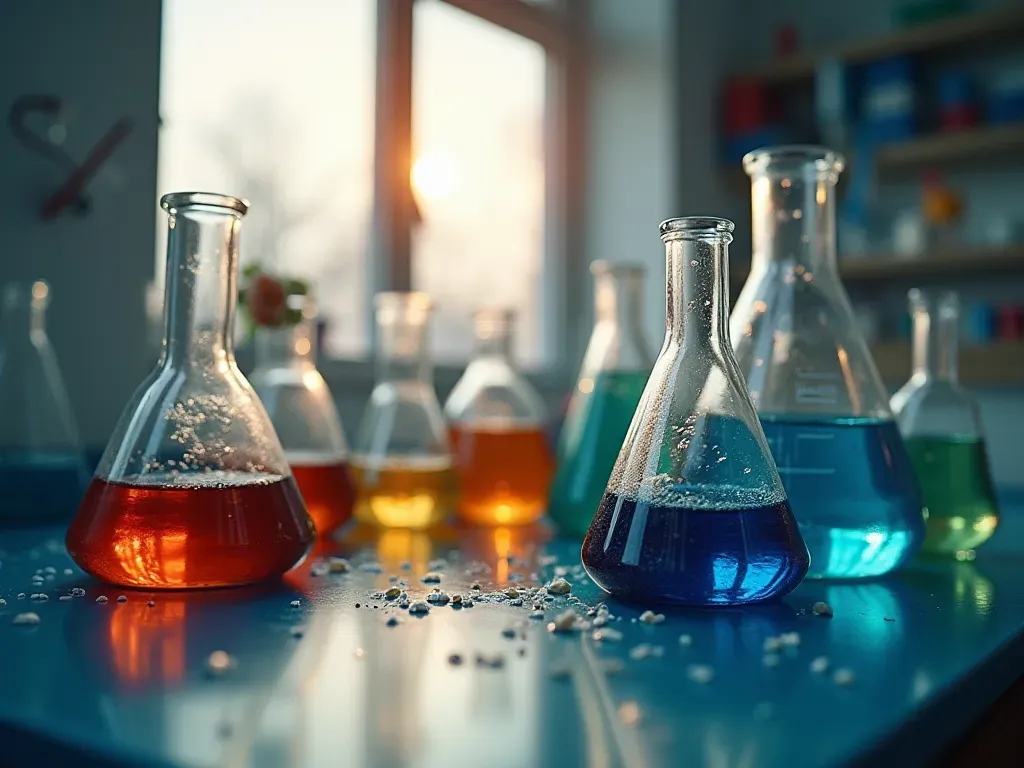
The 6 AM that never makes it to the poster session
It's a little after six in the morning. The fume hood hums at full speed. Your coffee is going cold on the bench top. And you're staring at a polymer sample that should have formed neat, uniform strands an hour ago — except it looks like wet spaghetti that got tangled with itself.
Not a magazine cover. That's what being a scientific researcher actually feels like on most ordinary days. And before anyone gets too comfortable with that image — hold on, because it has nothing to do with talent or intelligence.
I've watched brilliant postdocs cry over failed runs. I've sat in conference hallways where senior professors quietly admitted they were one rejection away from losing their lab's funding. The public sees the breakthrough. We see the 47 attempts that came before it.
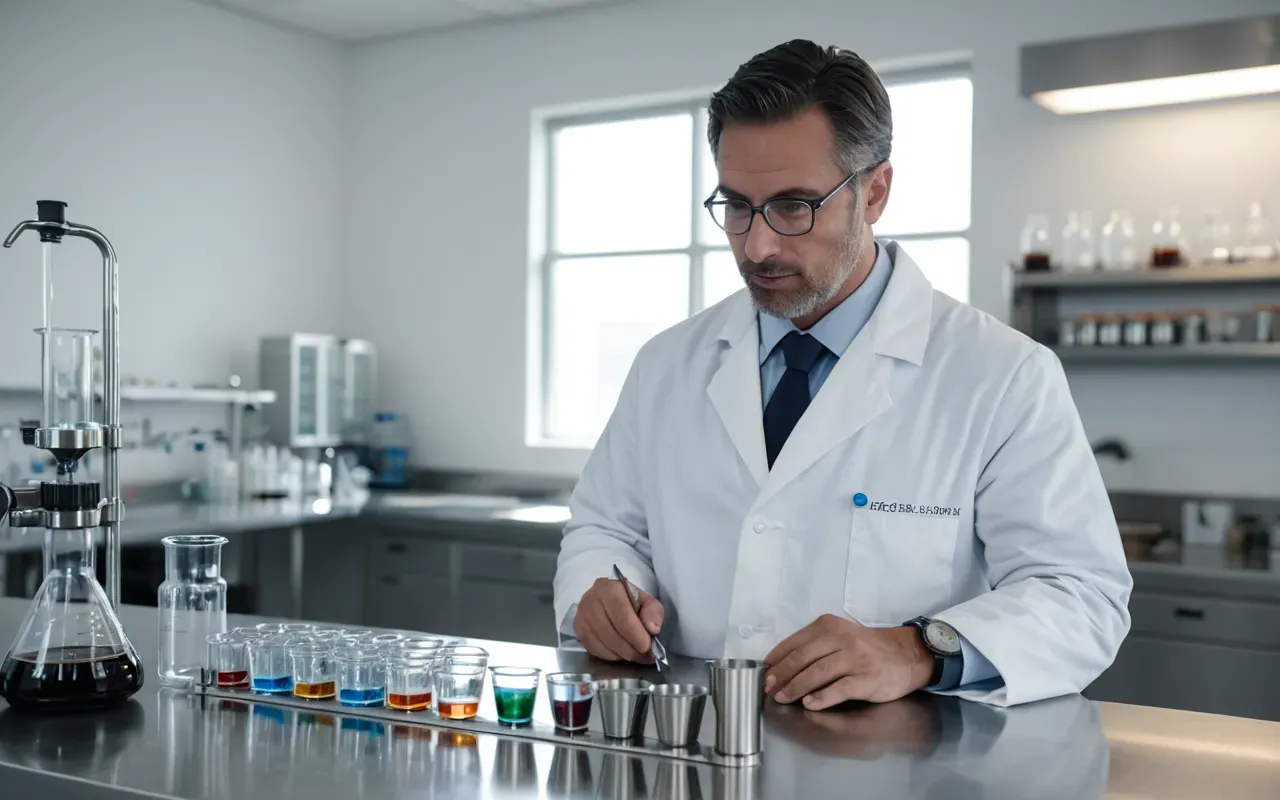
What people think a scientific researcher does versus what we actually do
Here's the thing most people get wrong. They picture a researcher as someone who sits at a desk all day reading papers, then occasionally runs an experiment to confirm what they already knew from theory.
Reality is messier. A typical polymer science day at a mid-sized European university lab looks something like this: two hours of hands-on bench work where things go wrong, forty-five minutes troubleshooting equipment that was fine yesterday, one hour writing emails to collaborators in three different time zones.
Then another two hours of reading — but not the kind where you sit back and absorb. You're hunting for a single sentence in someone else's methods section that might explain why your cross-linking density keeps drifting out of range.
And somewhere between the third and fourth coffee, there's that quiet moment when something clicks. Not an explosion of lightbulbs — more like a small, almost embarrassing realization that you had been reading one variable as constant for three weeks.
The invisible work that never shows up in a publication
Look at the last five papers from my lab group — and I mean really read them. Not a single one mentions the two months we spent recalibrating our rheometer. Not a word about the grant proposal that got rejected because of a budget line nobody questioned until it was too late.
That invisible layer is where most of our time actually goes. Equipment calibration. Data cleaning that should not take as long as it does. The phone call to the supplier whose shipment arrived with a different lot number than what your protocol specified.
I've started keeping a private log of all the non-publishable hours. After one full quarter, it came out to roughly thirty-one percent of my working time. That's almost an entire day every single week — gone into work that will never appear in any peer-reviewed document.
The myth of the lone genius who discovers something in a flash
You've seen this story before. The brilliant mind works alone in a cramped lab, has an epiphany at 2 AM, and the next day publishes something that changes the field overnight.
It's a great story. It sells books and fills lecture halls with wide-eyed students. And it is almost entirely fiction when applied to the day-to-day work of polymer science, natural products chemistry, or any other bench-based discipline.
The last novel drug delivery platform my group developed — the one that actually made it into a clinical trial partnership with a mid-sized pharmaceutical company — took four years and involved eleven people across three institutions. Eleven.
None of those eleven had a single eureka moment that solved the core problem. What they did was chip away at it. One adjusted the solvent ratio by two percent. Another swapped out the initiator system entirely based on a hunch she could not fully articulate in her grant application.
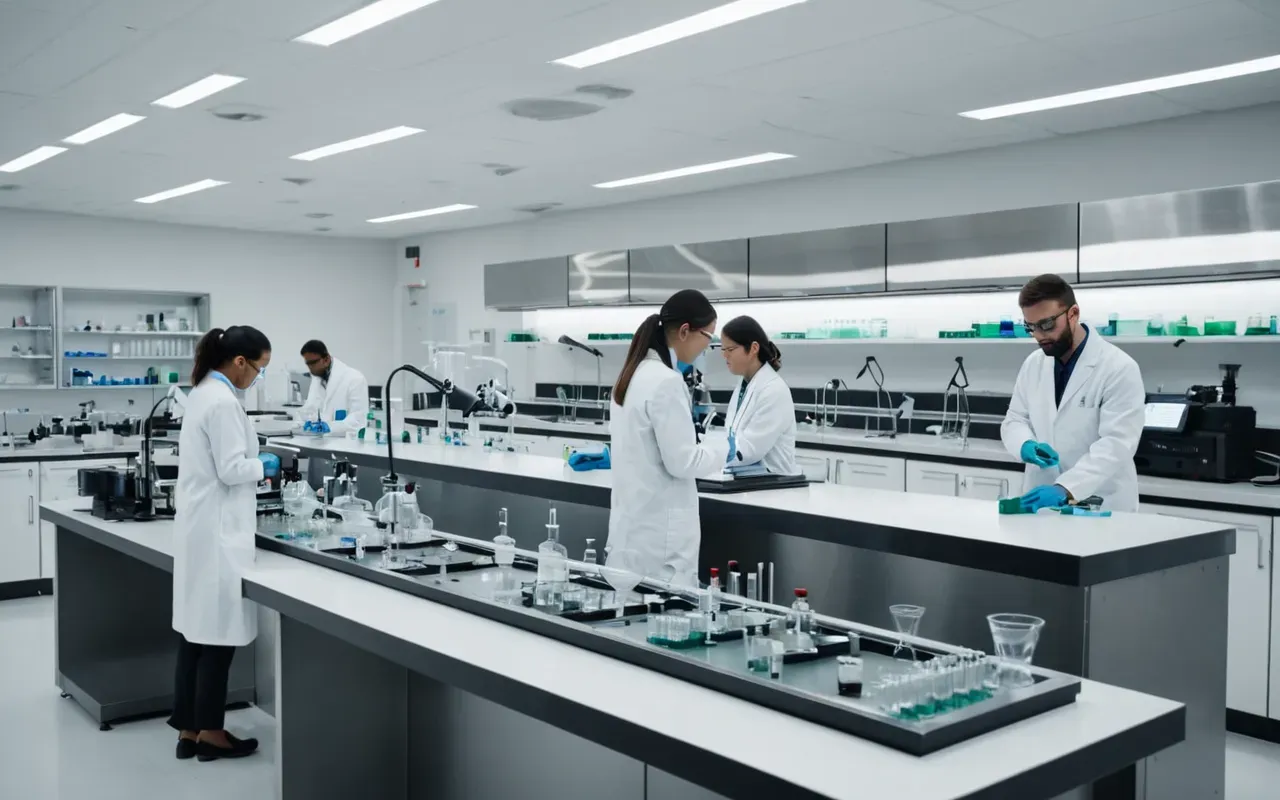
Where the real insight usually comes from — and why it is rarely your own idea
I've tracked where our best ideas originate over the past three years. The result surprised me: only about fifteen percent came from my own bench work or reading.
Roughly forty-five percent came from informal conversations — hallway chats, a comment during lab meeting that I did not fully process until the next morning, even something a student muttered over lunch while cleaning their glassware.
The remaining forty percent came from reading other people's failed experiments. Yes — the negative results. The ones that never got published because they were inconclusive or boring.
If you've ever wondered why your favorite plant compound might be a statistical ghost hiding in plain sight within the literature, that's where this kind of cross-referencing becomes genuinely useful rather than just academic.
The grant application that shapes the next two years of your life more than any experiment ever will
Let me be blunt. If you want to understand what a scientific researcher actually is — not as an idea but as a working professional in Europe today — start with their grant application, not their publication list.
A well-written proposal for a polymer-based biomaterial project at a mid-tier European funding body runs between eight and twelve pages. It has to justify not just the science but the feasibility, the team composition, sometimes even the environmental impact of your synthetic route.
I once spent three weeks on a single paragraph describing why our proposed degradation pathway was safer than the alternative. Three weeks of rewriting, cutting, adding back in, deleting again — all to convince a reviewer who might spend ninety seconds reading that section.
What a rejection letter actually teaches you about your own thinking
The first time I got a grant rejection with detailed comments — and I mean genuinely useful ones, not the generic boilerplate that many funding bodies send back — I was furious. My PI told me to read it three times before responding.
By the third reading I realized the reviewer had identified a genuine gap in my reasoning. Not an error — a gap. A place where I had assumed something was obvious without actually demonstrating it.
That single paragraph of feedback did more for my thinking than six months of independent work. And that's the part nobody tells you about research careers: sometimes your best teacher is someone who says no.
The Tuesday morning that changed how I think about what research really is
It was a Thursday that started like any other. I walked into the lab at half past eight, put on my gloves, and began running the standard dissolution profile test on our latest hydrogel batch.
By ten I had two data points that didn't match anything in our reference library. Not by a little — by enough to make me stop and actually think instead of just recording numbers.
I spent the next four hours ruling out instrument error. I re-ran controls. I called a colleague at another institution who worked with similar materials and asked if she had ever seen this specific pattern before.
She had. And the explanation was so simple it almost felt embarrassing — a trace impurity in our base polymer batch that changed the cross-linking kinetics just enough to shift the degradation window by nearly twenty percent.
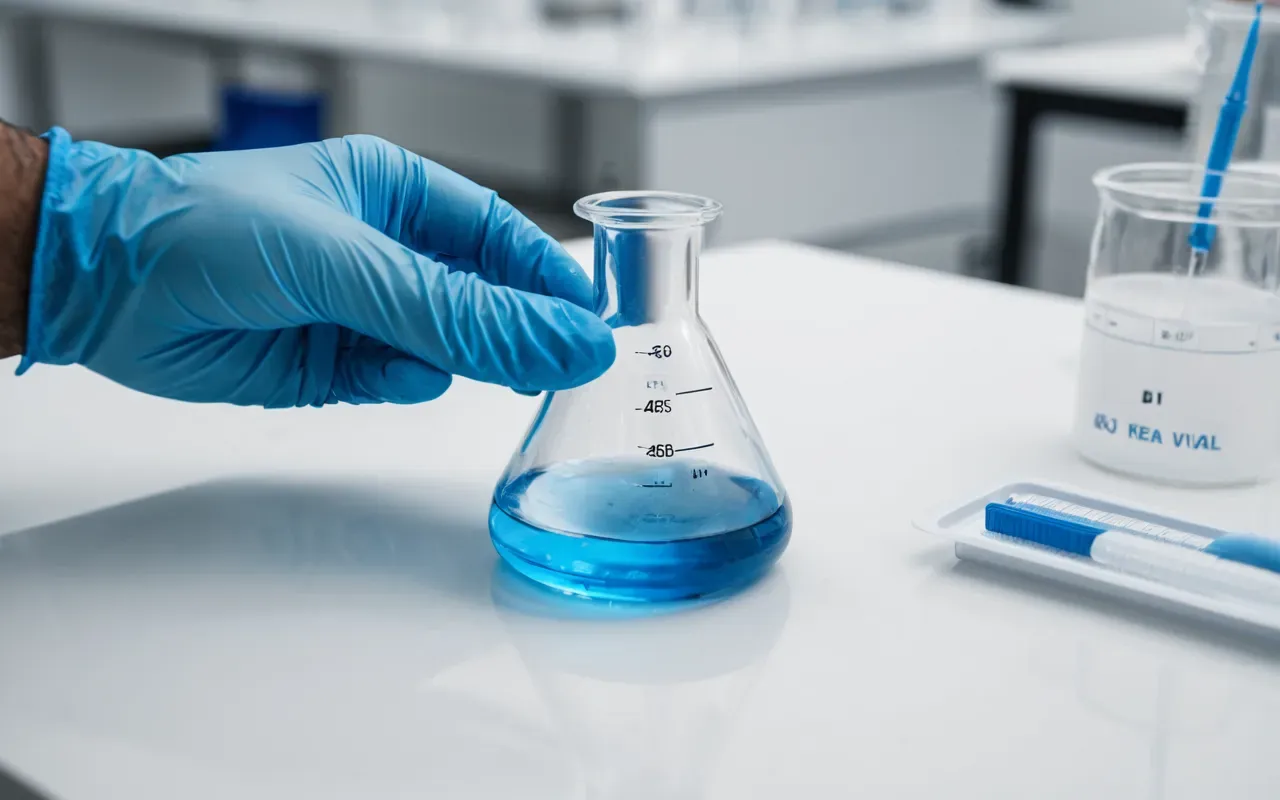
That single Tuesday morning — no conference hall, no press release, no funding announcement — did more to reshape my understanding of how polymer materials actually behave in the real world than any textbook chapter ever had.
And honestly? That's the part of being a scientific researcher that I love most. Not the fame or the citations — just the quiet moment when reality disagrees with your model and you get to figure out why.
Why the best discoveries are usually boring and unglamorous
Science communication has a weird bias baked into it. The flashy result grabs the headline. The elegant synthesis with four new steps lands the magazine cover.
But ask any working polymer scientist what actually moved their project forward last year, and you'll hear the same story on repeat: a small adjustment. A different drying time. A swap to a cheaper monomer source that happened to have lower impurity levels.
None of it is exciting. All of it matters enormously when you're trying to make a material that will sit inside someone's body for eighteen months and then dissolve cleanly without leaving residues.
What the Dutch research ecosystem actually gives you that other systems do not
I've worked in labs across three European countries over the past decade. And I'll say this plainly — the research culture here feels different from what I saw elsewhere.
The hierarchy is flatter. A second-year student can challenge a professor's methodological assumption in lab meeting without it being seen as an act of rebellion.
The funding landscape is more transparent. You can actually look up what comparable projects received and how the evaluation criteria were applied — which sounds obvious but is genuinely rare in other systems I've seen.
This doesn't mean everything is perfect. The pressure to publish still exists. The tenure clock still ticks the same way everywhere.
But there's a baseline assumption — quietly held and rarely stated out loud — that the goal of research here is to produce reliable knowledge rather than just high-impact citations. And for someone doing slow, careful polymer work, that difference matters more than you'd expect.
The one question I wish every new researcher asked in their first week
"What do we not know that the last group working on this material also did not figure out?"
Sounds simple. It's rarely asked. And yet it has saved me and my students more time than any amount of trial-and-error in the lab.
Because the answer almost always points you to a specific paper — usually from ten or fifteen years ago, often in a journal nobody outside your immediate field reads anymore.
And buried somewhere in the methods section of that old paper is either a warning you needed or a technique shortcut that someone spent two years discovering before writing it down in three sentences.
The quiet cost of doing careful work in a fast-pace academic system
I want to be honest about something that doesn't get discussed enough in this community.
The pressure to produce — papers, patents, grants, students who graduate on time and then stay in the field — creates a low-grade anxiety that many of us simply normalize.
I know researchers who haven't taken a full day off in over four months. Not because they were sick or busy with family — just because the cycle of experiment-run-analyze-write-submit-repeat never actually stops.
And the worst part? The people who feel it most are often the ones doing their best work. Because they care about getting things right rather than just getting them done.

What I wish I had known about the first five years of a research career
If you're starting out in polymer science or any bench-based health research discipline — genuinely read this section slowly.
Your first two years will feel like you're running in place. You'll read the same five papers on rotation and wonder if anyone else is actually making progress or just surviving.
That feeling doesn't mean you're failing. It means the foundation is still being poured and nothing about it looks like a building yet.
The researchers I most respect in this field are the ones who spent their first three years learning to ask better questions rather than rushing toward answers they couldn't fully defend.
The single skill that separates a good scientific researcher from a great one — and it has nothing to do with intelligence
It's patience. Not the passive kind where you wait for inspiration to strike while your samples dry.
It's the active kind — the willingness to sit with a result that doesn't fit your hypothesis long enough to actually understand why it disagrees with you.
I've watched talented researchers discard anomalous data within minutes because it contradicted the narrative they'd already started writing in their head.
And I've watched less technically gifted colleagues spend three days on the same data point and come back with a finding that changed the direction of an entire project.
The difference isn't raw ability. It's whether you treat your own uncertainty as a problem to fix quickly or as information worth sitting with.
What I would tell a student who wants to become a scientific researcher in this field right now
Learn your instruments deeply. Not just how to run them — but why they fail the way they do and what physical principle is actually being measured when you press that start button.
Read papers outside your immediate subfield. The best cross-pollination in polymer science often comes from organic chemistry methods or even materials engineering groups that are solving a similar problem with different constraints.
And write things down. Not just in your lab notebook — but for yourself, in plain language that a future version of you will understand when the excitement has faded and only the data remains.
If you're curious about how AI tools might actually be changing the way European labs handle their data workflows — because that's happening quietly right now and it will reshape what a researcher's day looks like within five years — this piece on AI secretly rewriting health research in Europe gives you the context I couldn't cover here.
And if your bench work involves natural product extracts and you've ever wondered whether the compound you're isolating is actually doing what the literature claims or just hiding as a statistical artifact — the chemical trick that makes plant extracts look like ghosts explains exactly how that happens.

The question that should be asked more often at every lab meeting
"What would change our interpretation if this result were wrong?"
Not "what does it prove" — because nothing in bench science ever truly proves. Just: what would we lose if this was an artifact?
It's a small shift in framing. But over months of lab meetings it builds a culture where uncertainty is treated as information rather than failure.
The part of the research life nobody posts about on social media
You see the conference poster. You hear the keynote speech. You read the press release that turns a modest methodological improvement into "a breakthrough in polymer-based medicine.".
What you don't see is the Tuesday afternoon when your gel electrophoresis run fails for the third time this week and you sit at your bench with a cold cup of coffee wondering if you should just go home.
You don't see the phone call to your supervisor where you say "I think I made a mistake" and they ask one quiet question that makes everything click into place again.
None of it is dramatic. None of it makes a headline. And yet all of it — every single unglamorous hour — is what actually builds the foundation that breakthroughs sit on top of.
Frequently Asked Questions
What does a polymer scientist actually do on a normal workday?
A typical day involves hands-on bench work such as synthesizing or testing polymer samples, troubleshooting equipment that behaves inconsistently from one run to the next, reading other researchers' methods sections for clues about your own results, and writing up data. Most working hours go into unglamorous tasks like calibration, sample preparation, and cross-referencing literature rather than running new experiments.
How long does it usually take to go from a research idea to a published paper in this field?
For polymer science and health-related materials research, I'd put the realistic range at eighteen to thirty-six months from initial concept to accepted manuscript. That covers the experimental work, the data analysis, at least one round of peer review with revisions — and often a second submission after reviewers ask for major changes.
What is the most common mistake new researchers make in their first year of bench work?
Here's the most frequent error I see: treating a single anomalous data point as either proof or failure, without checking whether instrument drift, sample contamination, or reagent batch variation could explain it. Thirty extra minutes running controls before you conclude something meaningful happened? That saves weeks of chasing false leads.
Can someone with no prior chemistry background realistically enter polymer research as a postgraduate student?
Yes. Most European PhD programs in polymer science and related health materials will take students from adjacent physical sciences or engineering backgrounds, as long as those students can show a solid grasp of basic organic chemistry and experimental methodology during the interview stage.

Comments ()