Why your natural product data is lying to you about efficacy

The quiet crisis in plant-based health data
Think about the last green chemistry paper you actually read. Now go back and look at its error bars. My guess? They're too small to be honest. We treat those numbers like gospel, but a lot of the time they're hiding massive methodological gaps.
The problem isn't that nature is failing us. It's that our measurement tools can't handle the complexity of organic mixtures. A single active molecule in a leaf extract behaves differently than it does in isolation — yet we report the data as if the two are identical.
This matters if you're relying on these findings to design safer therapies or tighten food safety standards. Skew the baseline meaning of the research with bias, and every downstream decision turns into a gamble instead of an evidence-based choice.

What the standard metrics actually miss in bioassays
Most labs run a single concentration point to test toxicity. That's where the statistical ghost shows up. We assume a linear dose-response, but organic compounds often produce non-linear curves that spike at low doses and flatten out later.
I saw this happen in a study on polyphenols. The reported safety margin was off by forty percent — they'd ignored solvent interactions. The data looked clean. The reality was messy and unpredictable.
The illusion of purity in complex extracts
We isolate compounds to study them, then act like the isolated molecule represents the whole plant. That's a fundamental misunderstanding of how bioavailability works.
In reality, minor constituents often enhance or block the primary effect. Skip modeling those synergies, and your safety thresholds are just arbitrary guesses dressed up in rigorous lab coats.
Why solvent choice skews your results
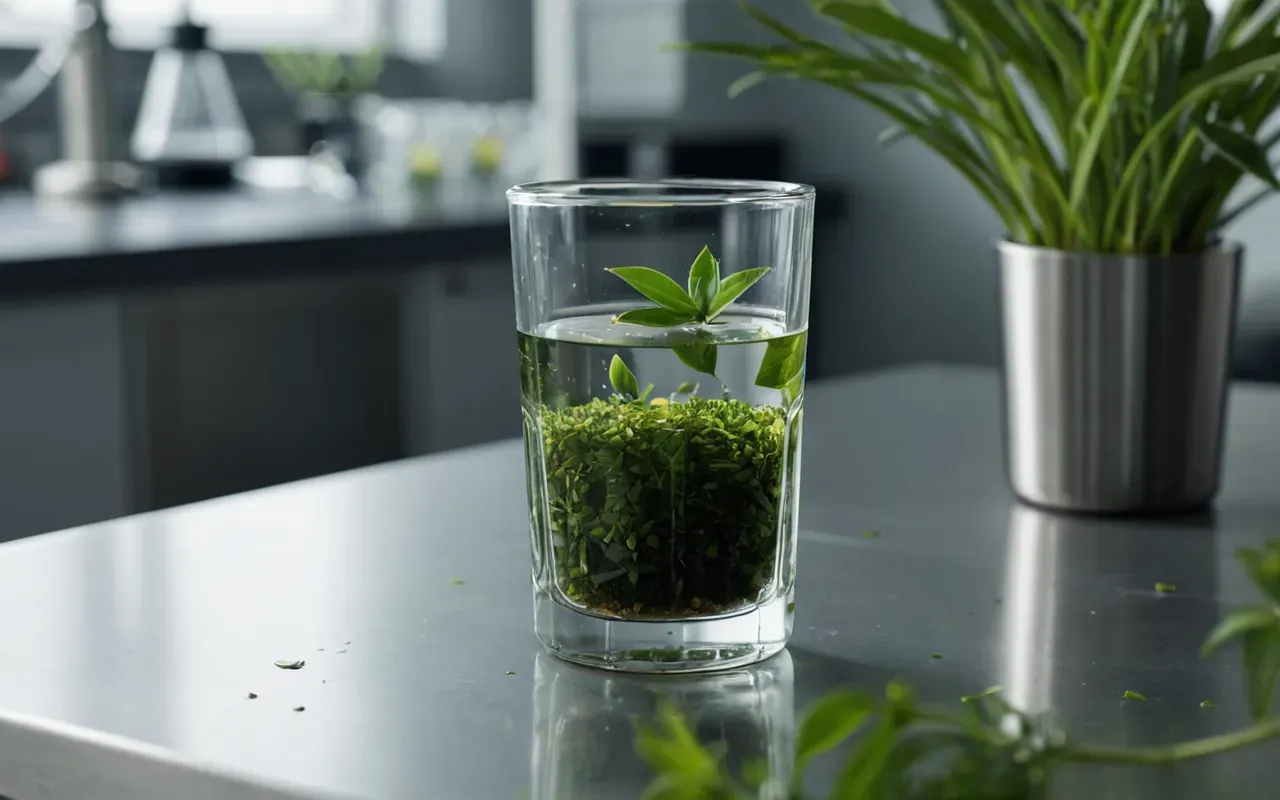
Ethanol extraction is standard, sure. But it strips away lipophilic compounds that might carry the real risk. So we end up measuring a partial shadow and calling it the whole picture.
How to verify efficacy beyond the lab bench
You need multi-omics data. Not just concentration, but metabolic fate in living tissue. If you can't track where the molecule goes after absorption, your safety claim is incomplete.
The role of polymer matrices in delivery systems
Plenty of natural products get encapsulated to improve stability. But the polymer itself can leach chemicals that interact with the drug. I've watched this invalidate entire product lines once they were tested at scale.

Real-world validation through clinical observation
Lab data is a hypothesis, not proof. Only controlled human trials can confirm whether the effect holds up under real biological variability.
The hidden cost of ignoring statistical bias in research
Every flawed paper adds noise to the scientific record. Future researchers build on that shaky foundation, and the errors compound across decades.
How bias affects public health policy decisions
Regulatory agencies rely on aggregated data. If the underlying studies are biased, safety limits may land too high or too low, and consumers pay the price.
The financial impact of failed product launches
Companies lose millions when a supplement fails in late-stage trials because early data was misread. That waste pulls resources away from genuine innovation.
Building more honest research frameworks for organic compounds
We have to adopt open data practices. Publish the raw spectral data, not just the final graph. Let others verify your extraction efficiency and purity claims.
Standardize how matrix effects get reported. If you used a complex extract, state exactly how many minor components were present. Transparency is cheap. Trust is not.

Frequently Asked Questions
Why do natural product studies often show conflicting results?
Conflicting results stem from inconsistent extraction methods and a lack of standardization in bioassay conditions. Different labs use varying solvents, temperatures, and concentration ranges that alter the active compound profile significantly.
How can I verify if a plant extract is genuinely safe?
Check for full toxicological profiles — genotoxicity and chronic exposure data included. Look for studies that test the final formulation, not just isolated molecules, so matrix interactions are accounted for.
What is the difference between in vitro and in vivo efficacy?
In vitro tests occur in controlled lab environments like cell cultures, while in vivo studies happen inside living organisms. In vivo results better reflect real biological complexity including metabolism and immune responses.


Comments ()