Why Your Chemistry Textbooks Are Lying To You About Electrons

The Century-Old Lie Hidden In Every Chemistry Classroom
I remember sitting in that cramped lecture hall. We were all staring at the whiteboard while the professor drew a long chain of carbon atoms. He used arrows to show how electrons pulled and pushed along those bonds. It felt like magic back then.
We called it the inductive effect. It was a core concept that every student memorized without question. For nearly one hundred years this explanation has defined how we understand molecular reactions. But here's the thing.
It might be completely wrong. A new study led by Dr Edwin Johnson at Newcastle University has thrown a wrench into this foundational idea. Modern computer simulations show that electrons do not behave the way our textbooks say they do.
This is not just a minor correction. We are talking about rewriting the core rules of organic chemistry. And if you think this only affects students you might be underestimating the ripple effect across health science and material development.
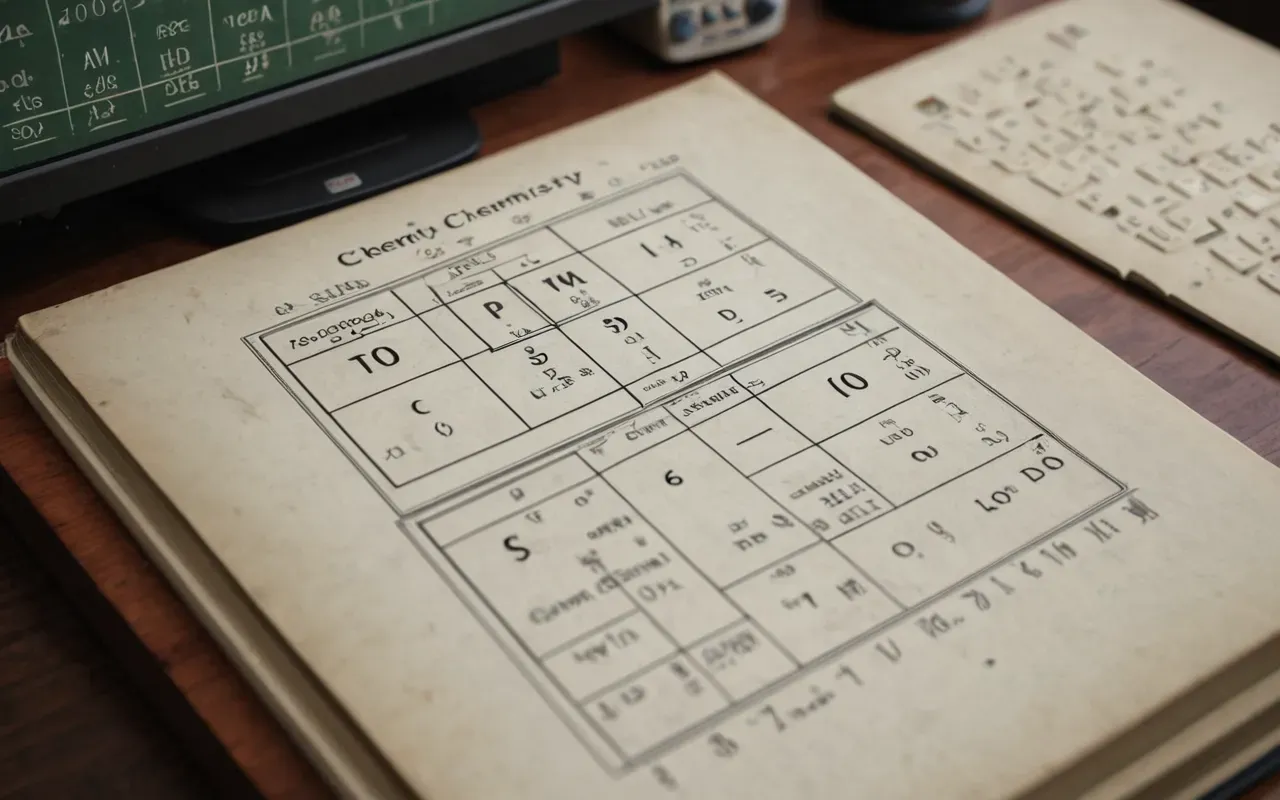
Why Modern Computers Expose Old Chemistry Myths
Think about how we used to explain things before satellites. We drew flat maps that distorted continents just to make them fit on a page. It was useful for navigation but terrible for understanding true geography.
The inductive effect is similar to that old map. It assumes electrons travel through bonds like electricity flowing down a wire. The researchers found this simplistic model breaks down under scrutiny.
Using advanced computational tools they mapped electron density across entire molecules. The results were shocking. Electrons do not transmit linearly over long distances as the old theory suggests.
Instead their behavior is determined by the overall distribution across the whole structure. It's a holistic view rather than a step-by-step tug of war between atoms.
This shift in perspective is massive. It means that decades of predictions about chemical reactivity might be built on a shaky foundation.
The Computational Revolution In Chemical Education
Dr Johnson points out that this new evidence forces us to rethink how we teach. If a foundational concept is inaccurate misunderstandings can carry into advanced research.
Students are currently learning shortcuts that do not match reality. Imagine building a skyscraper on sand. Eventually something has to give.
The team proposes a simpler framework based on molecular orbitals and overall electron clouds. It removes the need for complicated long-range effect explanations.
Honestly this makes so much more sense. Nature does not care about neat linear chains. It cares about total energy distribution.
How This Changes Health Science And Drug Discovery
You might wonder why this matters to you. After all chemistry textbooks are just books right? Wrong.
Organic chemistry is the bedrock of modern medicine. Every drug you take every synthetic polymer used in medical devices and many natural health products rely on these fundamental principles.
If we misunderstand how electrons move within a molecule we might be designing drugs based on flawed assumptions. This could explain why some experimental medicines fail unexpectedly in clinical trials.
Researchers studying natural products need this clarity. Many plant compounds have complex structures that defy simple linear rules.
The hidden power of organic chemistry in developing authentic natural health solutions depends heavily on precise molecular understanding. When the rules change everything changes.
Innovative advances in health science through organic chemistry innovations could accelerate dramatically once we adopt this new model.
Why Natural Product Research Needs An Update Too
Plants and microorganisms produce incredibly complex molecules. We often study these to find new treatments for diseases.
Discover natural discoveries with records of natural products that challenge our understanding. These compounds do not follow simple textbook rules.
By shifting away from the inductive effect scientists can better predict how these complex molecules interact with human proteins.
This is huge for pharmacology. It means we can design more effective treatments with fewer side effects.
The Controversy Behind Rewriting The Rules Of Science
Not everyone is happy about this news. Some educators argue that the old model works well enough for beginners.
They say teaching complex quantum mechanics to high school students is counterproductive. And fair point maybe.
But look at what happens when we keep teaching outdated ideas. Students reach university with misconceptions that are hard to unlearn.
The AI revolution in scientific research could rewrite the future of health just as computational chemistry is rewriting ours.
We must embrace accuracy over convenience. Science progresses by admitting when our old maps no longer match the territory.
This study proves that even century-old truths are subject to change when better tools arrive. That is the beauty of science.
Will Universities Adapt Their Curricula Quickly Enough
Changing textbooks is notoriously difficult. Publishing cycles are slow and professors prefer familiar material.
However the pressure for innovation is mounting. Advancing health science through organic chemistry innovations requires us to update our foundational knowledge.
I suspect the next generation of chemistry students will learn about electron clouds from day one. The linear chain model will become a historical footnote.
It is an exciting time to be involved in molecular research. We are finally seeing the truth behind the curtain.
Embracing A New Era Of Molecular Understanding
This discovery extends far beyond the lecture hall. It impacts how we develop new materials for renewable energy.
Innovative advances in natural products and polymers shaping health science rely on accurate chemical models.
Understanding real electron distribution helps create stronger polymers and more efficient solar cells. It all connects.
So the next time you see a chemistry diagram remember it might be just an approximation. The real world of molecules is far more chaotic and beautiful.
Science demands honesty from its educators. We must update our beliefs when the evidence shifts course.

The inductive effect has served us well for a century. But now is the time to put it gently back on the shelf.
A simpler more accurate framework awaits us. One that truly reflects nature's complexity without relying on outdated shortcuts.
We are witnessing a paradigm shift in real time. And honestly it feels good to see science correct itself.



Comments ()