The 58-year-old chemistry conference that quietly decides your next drug

The quiet engine of modern drug discovery
I remember the first time I walked into a university lecture hall and heard someone say that organic synthesis is "dead." The room went silent. Then a professor in the back row laughed and said, "That's exactly why we're still here." It was 2019, but the sentiment hasn't changed since. We keep hearing that AI will replace chemists, that automation will solve everything, that nature provides all we need.
Here's the thing. The molecules in your medicine cabinet were not discovered by accident. They were built. Atom by atom. Step by step. And behind every successful pharmaceutical breakthrough is a string of failed syntheses, dead ends, and late-night lab sessions that never made it into a journal article.
So why should you care about a conference happening in September 2027? Because that's where the next generation of synthetic methodologies are born. The Royal Society of Chemistry has been hosting this event since 1969, alternating between Oxford and Cambridge every two years.
The 29th edition will take place at Keble College in Oxford from the 13th to the 15th of September. It is not a massive trade show with thousands of exhibitors. It's an intimate gathering of some of the world's most accomplished synthetic chemists, postgraduate students, and industry researchers.
And that intimacy is the point. When you have a room full of people who spend their lives building molecules from scratch, the conversations get real fast. No marketing fluff. Just chemistry.
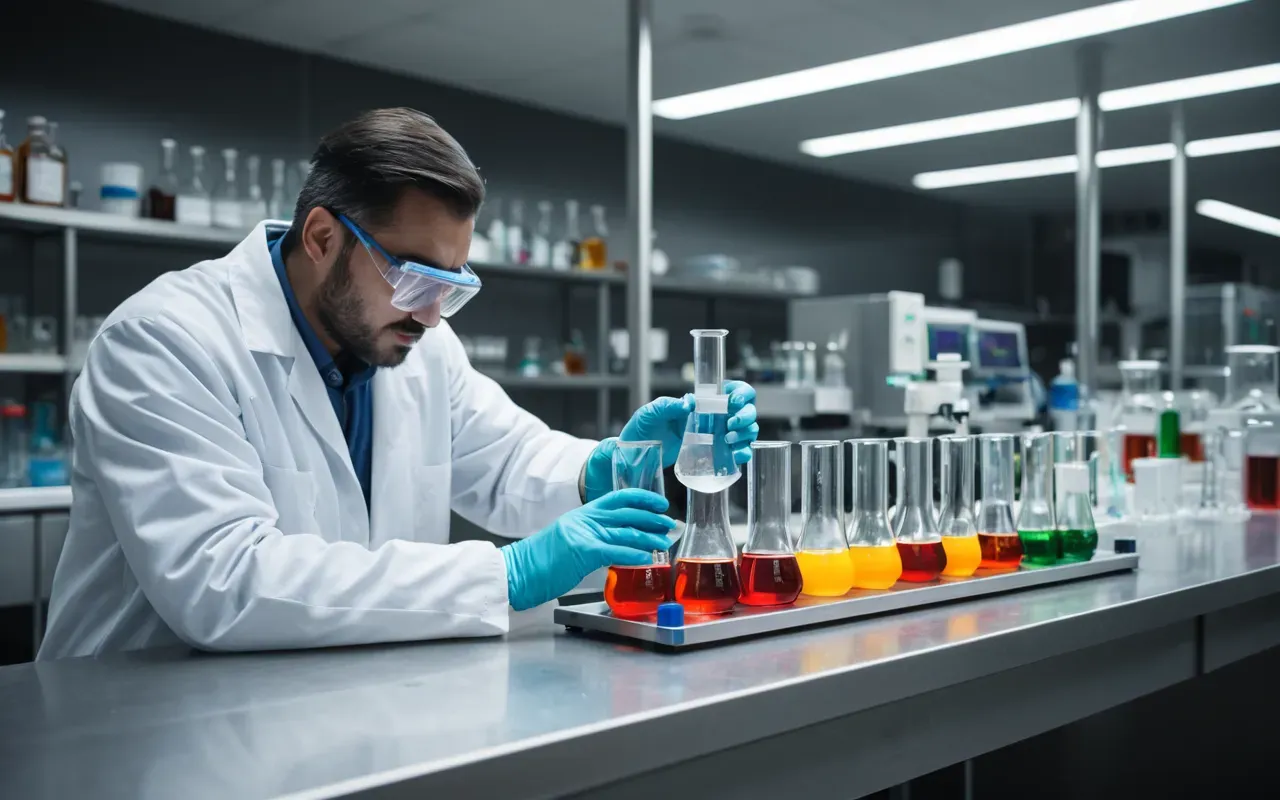
Why this conference matters more than the keynote talks suggest
Most people think scientific progress happens in big, dramatic moments. A breakthrough paper gets published. The world cheers. But I've spent enough time in this field to know that's not how it works most of the time.
The real magic happens in the hallway. In the coffee break conversations where someone mentions a trick they found for stabilizing an unstable intermediate. Or the poster session where a PhD student shows a method that works when everything else fails.
The conference covers chemical biology and medicinal chemistry, catalysis, and organic synthesis. These are not separate fields anymore. They bleed into each other constantly. A new catalyst developed for a petrochemical process might suddenly become the key to making a complex natural product more efficiently.
And that's where the health connection comes in. Natural products are still one of the richest sources of new therapeutic agents. But isolating them from nature is often impractical. Too rare, too complex, too unstable.
So we synthesize them. Or at least parts of them. And the methods that make this possible are exactly what gets presented and debated at events like the one in Oxford.
The hidden pipeline between basic research and your medicine cabinet
Think about the last antibiotic you took. Or the painkiller that got you through a bad week. Chances are good it was inspired by something found in nature. A plant, a fungus, a marine organism.
But the natural version is often not enough. It might be too toxic at therapeutic doses. Or it degrades in your stomach before reaching where it's needed. So chemists modify it.
And to do that safely and efficiently, you need synthetic routes. You need to understand how to build the molecule in a way that preserves its biological activity while removing unwanted side effects.
This is where the work presented at these symposia has a direct line to patient care. Not immediately. Never immediately. But over time, through the slow accumulation of better methods and deeper understanding.
What Dutch researchers should be watching from this gathering
The Netherlands has a strong tradition in chemical sciences. From the universities in Leiden and Delft to the industrial players in Rotterdam's port area, there is deep expertise in organic synthesis and its applications.
And the timing of this conference is interesting. It falls in late September, just after summer has officially ended and before the academic year really kicks into high gear.
For early-career researchers in the Netherlands who are working on natural products or synthetic methodology, this is a chance to see where the field is heading before it hits the journal literature.
The conference offers several funding opportunities that make attendance more accessible. The Royal Society of Chemistry provides grants for carers and accessibility needs, each up to one thousand two hundred pounds per year.
There's also a Researcher Development and Travel Grant of up to five hundred pounds for PhD students and early-career researchers in the chemical sciences. You don't need an accepted abstract to apply.
The practical implications for health science in the Netherlands
If you work in pharmaceuticals or biotechnology in the Netherlands, this conference is not just academic. It's a preview of what will be possible to make, and how.
A new catalytic method that makes a key intermediate ten times cheaper could change the economics of an entire drug manufacturing process. That's not hypothetical. It happens.
And when you combine that with the growing interest in natural products as sources of novel therapeutics, the overlap becomes even more significant.
The Dutch scientific community has been particularly active in polymer chemistry and its applications in drug delivery. And many of those delivery systems rely on synthetic building blocks that are made using the methods discussed at events like this.
A contrarian take on why conferences still matter in the age of AI
Here's where I'll take a slightly contrarian position. Some people argue that conferences are outdated. That everything can be shared online now. That AI will do the synthesis for us and we won't need to know how it works.
I've seen the AI synthesis tools. They're impressive for simple molecules. But when you get into complex natural products with multiple chiral centers and labile functional groups, they still struggle.
And that's where human expertise comes in. The chemists who have spent twenty years building molecules know things about reactivity and selectivity that no algorithm has fully captured yet.
Conferences are where that knowledge gets transmitted. Not through papers, which are often too slow to capture the nuances. But through conversation. Through seeing someone demonstrate a reaction live.
The 2027 symposium will feature speakers from around the world. They'll present their latest work before it's published anywhere else.
And for researchers in the Netherlands who are trying to stay ahead of the curve, that early access can make a real difference in their own work.
The specific methods that could change your next project
I don't know exactly what will be presented in September 2027. But based on the trajectory of the field, I'd expect to see significant work in asymmetric catalysis and flow chemistry.
Asymmetric catalysis is the backbone of modern pharmaceutical synthesis. It allows chemists to make only one enantiomer of a chiral molecule, which often means the difference between an effective drug and an ineffective or even harmful compound.
Flow chemistry is changing how reactions are run. Instead of large batch reactors sitting on a shelf for days, you can have continuous processes that give better control over temperature and mixing.
These are not minor improvements. They can reduce waste by orders of magnitude and make previously impossible syntheses routine.
The broader health science implications you might be missing
We tend to think of chemistry and health as separate fields. One deals with molecules in a lab, the other with patients in a clinic.
But that separation is an illusion. Every drug you prescribe has a chemical story behind it. Every side effect can often be traced back to a molecular interaction.
And when we talk about natural products in health science, the connection gets even more direct. Honestly, some of our most effective medications come straight from—or are inspired by—compounds found in nature.
The research presented at the Oxford symposium feeds directly into that pipeline. New synthetic routes mean we can actually make more of these valuable compounds, test them under better conditions, and develop improved versions that work even harder.
For the Dutch scientific community, which has always balanced rigorous basic research with applied health sciences, this hits especially close to home.
Connecting synthetic chemistry to practical health applications in the Netherlands
If you work on natural products or polymer-based drug delivery systems in the Netherlands, I'd seriously encourage you to keep an eye on this conference.
The methods that get presented there will eventually find their way into your lab. Whether through a collaboration, a postdoc who attended, or simply by reading the proceedings.
And if you're a student just starting out in this field? Attending—or even following the conference remotely—can give you insights that textbooks simply cannot.
The Royal Society of Chemistry has made it relatively easy to get involved. The bursaries and grants I mentioned earlier are specifically designed to remove financial barriers.

The deadlines and practical details you actually need to know
Let's get practical. The poster abstract deadline is July 5th, 2027. If you want to present your work as a poster, that's when the submission closes.
The early bird registration deadline is August 2nd, and the standard deadline is August 23rd. These are for conference fees, not abstracts.
The venue is Keble College on Parks Road in Oxford. It's a beautiful setting for three days of intense scientific discussion.
And if you're traveling from the Netherlands or elsewhere in Europe, the electronic travel authorization for the United Kingdom is something to keep on your radar.
The conference will cover all aspects of contemporary organic synthesis. From classical methods to the newest strategies emerging from computational chemistry and machine learning.
It is open to early-career scientists, postgraduate students, and established researchers in academia or industry. This breadth makes it a unique forum for cross-disciplinary exchange.
A final thought on why this matters beyond the chemistry itself
We live in a time when scientific communication is faster than ever. Preprints appear within days of an experiment being completed. AI tools can analyze data at speeds no human could match.
And yet. And this is the part that surprises me every time I think about it. The most important conversations still happen face to face.
Not because we're old-fashioned. But because chemistry is a tactile field. It's about hands in the lab, eyes on a reaction mixture, ears listening for the click of a condensation.
A conference like this one captures that. It brings together people who share not just a field but a way of thinking about molecules.
For the Dutch scientific community in particular, which values both rigorous basic research and practical application, this kind of event is a reminder that progress requires dialogue.
So whether you're a professor in Leiden or a PhD student in Delft, an industry researcher in Rotterdam or a curious undergraduate anywhere else. Keep this conference on your radar.
Because the molecules that will define the next decade of health science are being built right now. And some of the most important conversations about how they're being built happen in a small college building in Oxford.

Comments ()