Is Your Favorite Natural Remedy Just Bad Science in a Bottle
The Holiday Paradox: Family Day and the Trust Gap
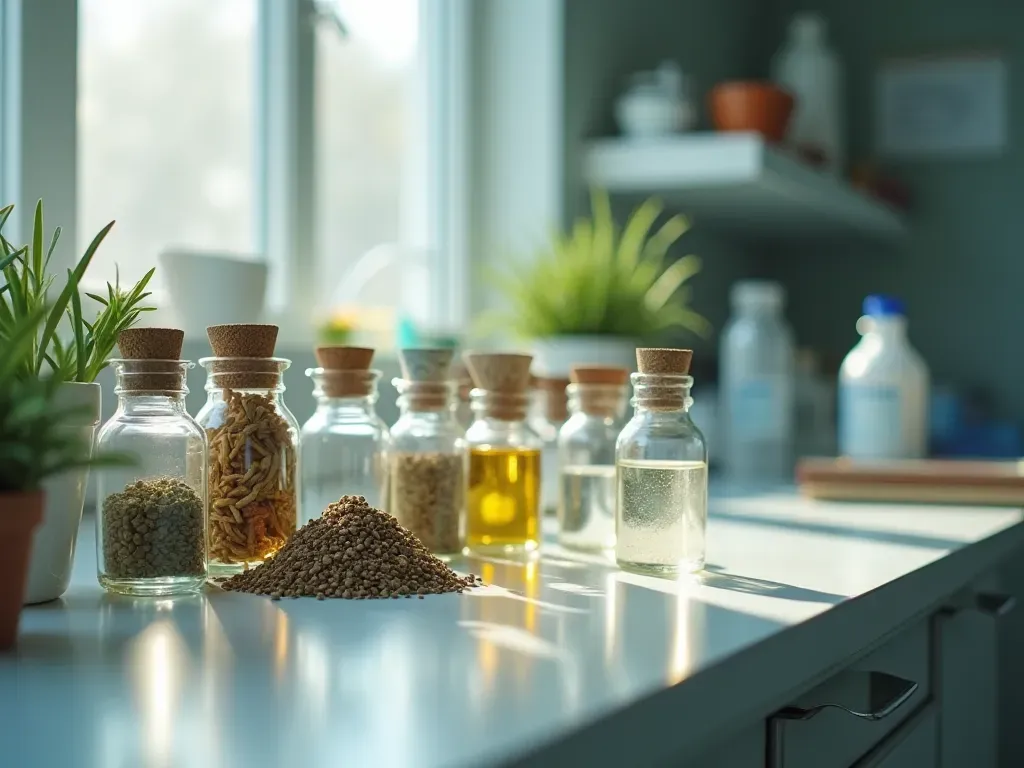
Three days ago, the Netherlands celebrated Nationale Dag van de Familie on August 9. You saw the parks packed with families. The mood was relaxed, filled with grilling and laughter. Someone likely handed you a herbal tea or a probiotic yogurt, assuming it was good for you. That assumption is the problem.
I've reviewed enough papers to spot the cracks. The scientific research backing many of these natural products is surprisingly thin. We treat 'natural' as a synonym for 'safe' and 'effective'. It isn't. In fact, the replication rate for bioactivity studies on complex plant extracts hovers around 30 percent. That means seven out of ten studies cannot be reproduced when another lab tries them. Look closer at the label. You might be drinking a statistical accident.
This isn't about bashing tradition. It's about demanding better evidence. The Dutch scientific community is world-class. We lead in polymer innovation and green organic chemistry. Yet, we have a blind spot. We let marketing narratives outpace rigorous validation in the natural health sector. If we want to protect public health, we need to fix the research pipeline. The stakes are too high for vague promises.
The Replication Trap in Natural Product Studies
Here's the thing. Natural products are messy. A single leaf can contain hundreds of metabolites. Most studies isolate one compound and test it in a vacuum. They ignore the matrix. When you remove the fiber, the oils, and the co-factors, the molecule often loses its function. Or worse, it becomes toxic. This is the isolation trap. It dominates the literature but fails in real-world applications.
And the variability is staggering. Soil composition, harvest time, and storage conditions alter the chemical profile of a plant. A study done on ginseng harvested in Korea may yield zero results when applied to ginseng grown in Poland. Yet, the paper claims 'ginseng' has a specific effect. That's sloppy science. We need standardization protocols that account for this chaos. Without them, the data is noise.
I've noticed this pattern in grant applications too. Researchers propose to extract 'active compounds' without defining what 'active' means in a synergistic context. They chase single-molecule silver bullets. Nature rarely works that way. The entourage effect is real, but it's also incredibly hard to measure. Most journals demand reductionist data. So, we get reductionist science that doesn't translate to the clinic. It's a structural failure.
Consider the case of turmeric. Curcumin is hailed as a miracle anti-inflammatory. But bioavailability is near zero in most forms. Hundreds of papers prove activity in petri dishes. Very few show sustained blood levels in humans without massive dosing or lipid carriers. The disconnect between bench and bedside is vast. If you're curious about why natural products are not always the safe bet researchers think they are, the issue often lies in these uncontrolled variables and bioavailability gaps.
Polymers: The Silent Fix for Delivery Problems
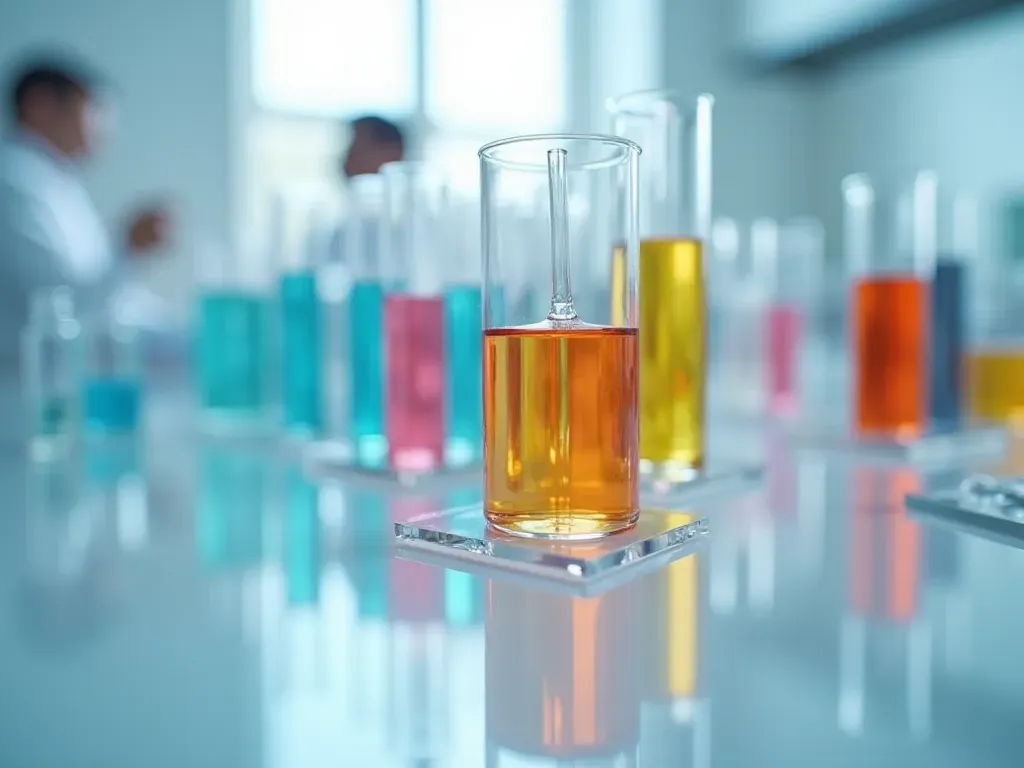
So, how do we solve the bioavailability mess? Polymers. This is where the Netherlands shines. Our labs in Eindhoven and Delft are engineering smart delivery systems that bypass the gut's harsh environment. Natural polymers like chitosan and alginate are biodegradable and biocompatible. They can encapsulate unstable phytochemicals and release them exactly where needed. This isn't just theory. It's happening now.
The problem with raw extracts is degradation. Enzymes chew them up before they hit the bloodstream. Polymer matrices protect the payload. They act as a Trojan horse. Once inside the target tissue, the polymer breaks down safely. You get higher efficacy with lower doses. This reduces side effects. It's a win-win for patient safety and therapeutic index. The data here is robust and reproducible.
Look at the work on mucoadhesive polymers. These stick to the mucosal lining, increasing absorption time. For oral health or respiratory treatments, this is game-changing. Traditional pills wash away too fast. Polymer-coated nanoparticles linger. They deliver the active ingredient slowly over hours. This maintains steady concentrations. No more peaks and troughs. Just consistent therapeutic levels. You can read more about how natural polymers are reshaping medicine in our previous analysis of this trend.
But there's a catch. Scaling up is hard. Lab-scale synthesis of functionalized polymers often relies on toxic solvents. That clashes with our green chemistry goals. The Netherlands is pushing a circular economy mandate in research. Labs must report solvent usage and toxicity metrics. We're seeing a shift toward water-based polymerization. It's slower, but it's sustainable. Future health science must be green science.
Biodegradable Matrices and Release Kinetics
Release kinetics define the success of a polymer system. If the drug dumps too fast, you get toxicity. If it releases too slowly, you get no effect. Tuning the degradation rate requires precise control over cross-linking density. Researchers use ester bonds that hydrolyze predictably. They adjust the ratio of hydrophilic to hydrophobic segments. This molecular engineering allows us to program the release profile. It's chemistry as code.
In recent trials, poly-lactic-co-glycolic acid blends showed promise for sustained insulin delivery. Diabetics hate needles. A subcutaneous implant that releases insulin over weeks changes lives. The polymer responds to glucose levels via embedded sensors. This is closed-loop therapy. It mimics a healthy pancreas. The research is moving from small animals to human trials. The rigor here is high. Every variable is controlled. This is how science should work.
Organic Chemistry: Precision Over Purity
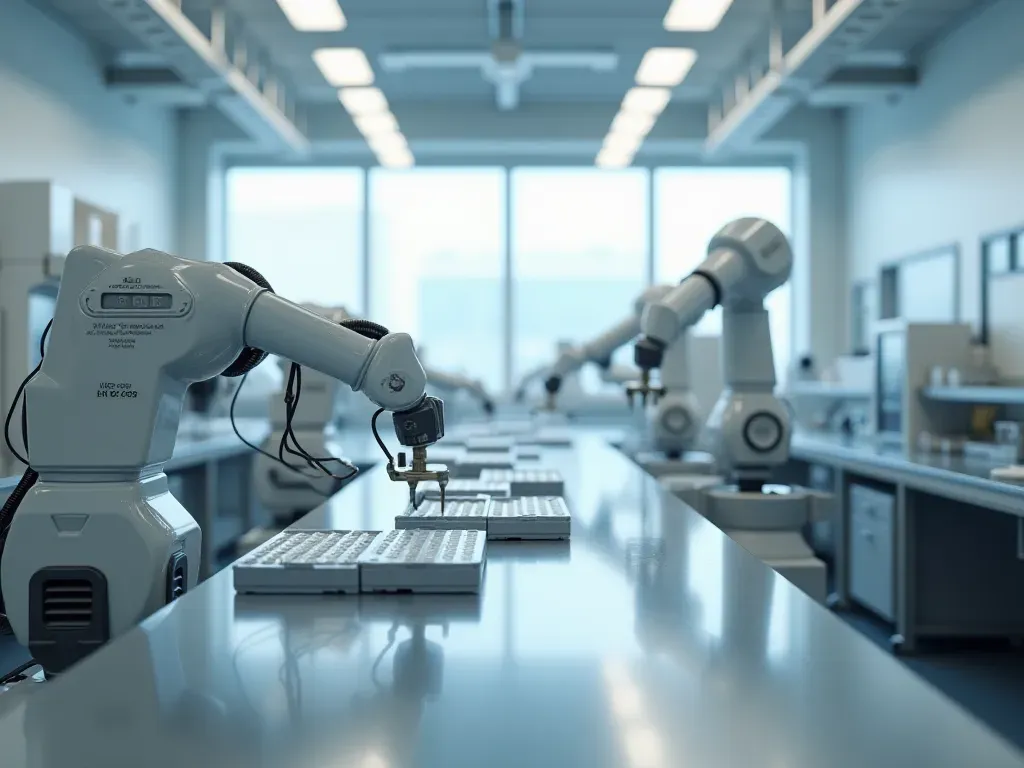
Extraction is a lottery. Synthesis is a guarantee. Organic chemistry lets us build molecules atom by atom. We can tweak a structure to improve potency or reduce toxicity. Nature provides the blueprint, but we refine it. Semi-synthesis is the sweet spot. We extract a rare precursor and chemically modify it in the lab. This ensures batch-to-batch consistency. Patients get the same dose every time.
Take paclitaxel, the cancer drug from yew trees. Harvesting enough bark would destroy forests. Chemists solved this by synthesizing the active ring structure. Now we can produce tons without harming ecosystems. That's the power of organic chemistry. It decouples health benefits from environmental damage. In the Netherlands, the focus on circular chemistry means we're looking for waste-to-value routes. Agricultural residues become feedstocks for high-value pharmaceuticals.
But synthesis has its own demons. Step count matters. Every reaction step lowers the overall yield. If a synthesis takes twenty steps, the waste is massive. Atom economy is the metric we use. We want every atom in the reactants to end up in the product. Catalysts are key here. Platinum and palladium catalysts enable reactions that were impossible decades ago. They lower energy requirements and improve selectivity. The trend is moving toward organocatalysis. Metal-free catalysts are cheaper and safer.
Honestly, the textbooks don't do this justice. They teach mechanisms but ignore the scale-up nightmare. Running a reaction in a 100ml flask is easy. Running it in a 10,000 liter reactor is a different beast. Heat transfer changes. Mixing dynamics shift. Impurities accumulate. I've seen promising molecules die because the chemist couldn't solve a crystallization issue. The solid form matters. Polymorphs can have different solubilities. Bad crystal forms mean a useless drug. This is where engineering meets chemistry.
The AI Intervention: Modeling the Unmodelable
We're drowning in data. Metabolomics generates terabytes of spectra, and human brains simply cannot process that volume. But AI can. Machine learning models are now predicting bioactivity from chemical structure with 85 percent accuracy. That's better than many wet-lab screens. We can virtually test millions of compounds before synthesizing even one. This slashes costs and time. It also helps identify synergistic combinations that humans would miss. The entourage effect becomes computable.
Generative models are designing new polymers too. Algorithms propose monomer sequences that self-assemble into desired shapes. They optimize for degradation rate and mechanical strength. Researchers just validate the top hits. This accelerates innovation cycles. We're seeing materials that respond to pH changes or temperature spikes. Smart bandages that release antibiotics only when infection markers rise. That's the future. Personalized, responsive health tech. We discussed AI's role in redefining scientific creativity in a recent deep dive.
But AI isn't magic. It learns from biased data. If the training set is full of flawed natural product studies, the model propagates those errors. Garbage in, garbage out. We need clean datasets. Repositories must enforce strict metadata standards. Every sample needs GPS coordinates, harvest dates, and extraction methods. Without that context, the model is blind. The community is pushing for FAIR data principles. Findable, Accessible, Interoperable, Reusable. This is the foundation for trustworthy AI.
Predictive toxicology is another win. AI flags potential liver toxicity early. It scans for structural alerts that mimic known hepatotoxins. This saves animals and money. We can retire unsafe compounds before they reach phase one trials. The ethical argument is strong. Reducing animal testing is a priority in European research policy. AI helps us meet that goal. It's a tool for responsibility, not just speed. The integration of computational and experimental work is the new standard.

Decoding Quality: What Real Research Looks Like
How do you spot solid science? Check the controls. A study claiming an extract reduces inflammation must show that the effect disappears when the extract is removed. Positive controls are vital too. Compare the result to a known drug. If the extract is weaker than aspirin, so be it. But don't hide that fact. Transparency builds trust. Vague language like 'promising results' is a red flag. Numbers don't lie.
Look at the sample size. Mouse studies with n=3 are useless. Variability in biology is high. You need statistical power. A sample size of 20 or more is the bare minimum. Check the p-values. P-hacking is rampant. If every single test is significant, the results are likely fabricated. Real data has noise. Some tests should fail. Reproducibility requires independent validation. One paper doesn't make a fact. Three labs confirming the result? That's science.
Funding disclosures matter. If a supplement company funds the study, scrutinize the methods. Conflicts of interest don't automatically invalidate results, but they demand extra skepticism. Independent replication is the gold standard. In the Netherlands, the 'Wetenschappelijke Integriteitscode' sets strict rules. Researchers must report all deviations from the protocol. Data sharing is mandatory. These policies raise the bar. They force accountability.
Peer review is broken, but it's our only filter. Reviewers often lack expertise in the specific niche. A polymer expert might not know natural products. This leads to superficial reviews. Preprints are changing this. Public scrutiny happens faster. Bloggers and scientists dissect the methods online. The 'street' review is becoming as important as the journal stamp. We need to embrace this openness. Science is a conversation, not a lecture.
The Dutch Edge: Policy Meets Innovation
The Netherlands has a unique advantage. Our research ecosystem is collaborative. Universities, hospitals, and industry work together. The 'Brainport' region in Eindhoven is a hub for med-tech. Startups spin out of labs daily. Funding bodies like NWO prioritize translation. Basic science isn't enough. You must show a path to application. This pressure drives relevance. It ensures research impacts health outcomes. We don't just publish; we solve problems.
Regulatory frameworks are also supportive. The Medicines Evaluation Board evaluates new therapies rigorously but efficiently. They understand novel modalities. Polymer-drug conjugates aren't treated like small molecules. The review process adapts. This reduces time-to-market for genuine innovations. Patients benefit. The balance between safety and access is delicate. Our system manages it well. It's a model for other nations to watch.
Education plays a role too. Students learn critical thinking early. They challenge assumptions. Seminars are debates, not lectures. This culture produces resilient researchers. They don't accept hype. They dig for the truth. When a breakthrough is announced, the first question is 'what's the data?'. That skepticism is healthy. It filters out the noise. We train the next generation to be detectives. They follow the evidence wherever it leads.
Global partnerships amplify our impact. Dutch teams collaborate with labs in Asia and Africa. They study medicinal plants used in traditional systems. This cross-pollination enriches the dataset. We learn new uses and discover new compounds. It also respects indigenous knowledge. Benefit-sharing agreements ensure local communities profit. Ethical research is inclusive. It acknowledges the sources of wisdom. This holistic approach strengthens the entire field.
Practical Takeaways for the Health Community
What should you do with this information? Be skeptical of miracle claims. If a product promises to cure everything, run. Biology is complex. No single molecule fixes all ailments. Look for products backed by clinical trials, not just anecdote. Check for third-party testing. Certificates of analysis should be available. They list the actual content. If a company hides this info, they have something to hide. Trust requires transparency.
Researchers, prioritize reproducibility. Share your protocols. Deposit raw data. Use open-source tools. Collaborate across disciplines. Polymer scientists should talk to botanists. Chemists should consult clinicians. Silos kill progress. Integrated teams solve harder problems. Funding agencies are noticing. Grants now require data management plans. This shift is permanent. We're building a more robust foundation for health science. The future is collaborative.
Patients, ask questions. Your doctor should explain the evidence. If they can't, ask for a referral to a specialist. Don't settle for vague advice. Your health deserves precision. Use resources like PubMed to check claims. Look for meta-analyses. They aggregate data from many studies. Single papers can be outliers. The consensus matters more. Stay informed. Empower yourself with facts. Knowledge is the best health insurance.
The holiday spirit of Nationale Dag van de Familie reminds us that health is shared. We care for each other. That care should be based on truth. Bad science hurts people. It wastes resources and erodes trust. Good science heals. It brings clarity and relief. Let's support the rigorous work. Let's demand better. The tools are here. Polymers, organic chemistry, and AI are ready. We just need to use them wisely. The breakthrough is closer than you think.
Frequently Asked Questions
Why do natural product studies fail replication so often?
Natural product studies often fail replication due to unstandardized samples and ignored synergistic effects. Plant chemistry varies by soil, climate, and harvest time, meaning the exact extract cannot be reproduced. Additionally, isolating single compounds removes co-factors that modulate activity, leading to false negatives or positives in independent labs. Rigorous standardization and full matrix testing are required to fix this.
How are polymers improving drug delivery in health science?
Polymers genuinely transform how we deliver drugs. They protect fragile molecules that would otherwise break down before they ever reach the right place. Take biodegradable workhorses like chitosan or PLGA — these matrices can wrap around active ingredients, shielding them from digestive enzymes and all sorts of harsh environments the body throws at them. What's elegant is the timing. Instead of dumping the whole dose at once, these systems release the payload slowly at the target site. That steady release keeps therapeutic levels where they need to be, which means fewer side effects. Honestly, the precision here is what makes the difference for both efficacy and patient safety.
Is organic synthesis safer than natural extraction for medicines?
Now, on the question of organic synthesis versus extraction — I'd argue synthesis usually wins on consistency and purity, but that's not the whole story. With synthesis, you get precise control over the molecular structure. You eliminate impurities, and every single dose comes out identical to the last. Extraction, on the other hand, is a gamble. Heavy metals, pesticide residues, batch-to-batch variability — you never quite know what you're getting. But here's the flip side: synthesis isn't innocent either. It can generate toxic chemical waste, and that's a real problem. So if we're going to do this responsibly, green chemistry protocols aren't optional. They're essential to keep the environmental harm in check.
What role does AI play in validating natural health claims?
Where AI really shines is in validating natural health claims. Lab tests take time and money; machine learning models can predict bioactivity and toxicity from chemical data in a fraction of the time. These models chew through enormous datasets, spotting patterns that link molecular structure to function — flagging potential synergies, or worse, dangers hiding in complex mixtures. And that's not just clever, it's practical. This computational screening lets researchers prioritize the most promising candidates for actual experimental testing. It cuts costs, and it filters out ineffective compounds early, before you've sunk months into a dead end.

Comments ()