Why the World Held Its Breath Over Two Papers About Bird Flu
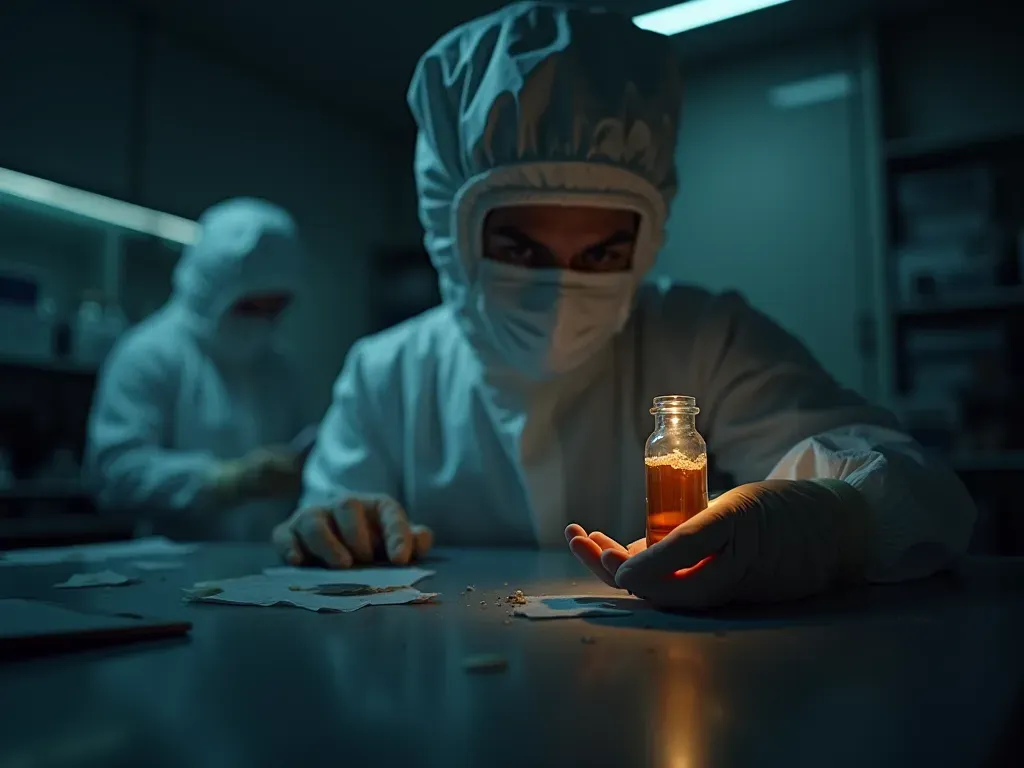
The moment the internet split in two over a virus
Picture a virologist in late . Months spent in a high-containment lab, breathing filtered air, chasing one question: how does bird flu jump to mammals? You think you've cracked it. You write it up. You send it to Nature and Science. A routine peer review, you figure. The world, you do not expect, to stop.
That is exactly what happened. Two independent teams — Ron Fouchier's in the Netherlands, Yoshihiro Kawaoka's in Wisconsin — published work on HN. The strain is deadly. Avian flu, they call it. And the scary part isn't just the death rate. It's the transmission potential. If the virus learns to spread easily between mammals, a pandemic becomes possible. The papers showed which specific mutations allowed the jump. That detail was the bomb.

The reaction was immediate and volcanic. Critics argued that publishing the exact genetic changes was dangerous — like handing a blueprint to a terrorist, they said. Supporters, many of them inside the scientific community, argued the opposite: secrecy is worse. Sharing knowledge helps the world prepare. This wasn't just a debate. It was a crisis of confidence in how science talks to the public.
The specific mutations that changed everything
Let's get specific. The researchers identified changes in the hemagglutinin protein — the key that opens the door for the virus to enter cells. The mutations made the virus more stable in the lungs of ferrets. And ferrets aren't just lab animals. They're a proxy for humans; their respiratory systems work similarly. If the virus transmits in ferrets, it might transmit in people. That is the core fear.
I was struck by how precise the data was. The teams did not guess. They sequenced the genes. They inserted specific mutations into a different strain. They observed the results. This is rigorous, high-quality science — the kind that saves lives by revealing how viruses evolve. But the precision is exactly what made it controversial. Detailed protocols are useful for replication. They are also useful for misuse. That duality is the heart of the problem.
Why ferrets matter more than you think
You might wonder why scientists use ferrets for flu research. It is not arbitrary. Ferret airways contain the same receptors that human lungs use. When a virus binds to those receptors in a ferret, it mimics what would happen in a human. This makes the ferret model the gold standard for studying transmissibility. Without this model, we would be flying blind. We would not know if a new strain is a local nuisance or a global threat.
The controversy intensified because the papers detailed the exact steps to create these transmissible strains. Critics said this was a recipe. Defenders said it was a map. Without the map, we cannot navigate the terrain of emerging diseases. I lean toward the defense. Secrecy creates a vacuum. In that vacuum, fear grows. Transparency allows for scrutiny. It allows other labs to verify the work. It allows for better safety measures. It is not perfect, but it is better than silence.
The governance gap in a wired world
Here is the thing. Our rules for dangerous research were written in the th century. They assumed that sensitive knowledge was held by nations and military labs. They assumed that the main threat was state actors. That world no longer exists. Today, a single scientist with a laptop can share data globally in seconds. The barriers to entry for biotechnology are lower. The speed of dissemination is infinite. Our regulatory frameworks are slow and bureaucratic. They are struggling to keep up.
The U.S. National Science Advisory Board for Biosecurity weighed in. They recommended redacting some details. Then they reversed course. They voted to allow full publication. This flip-flop revealed the uncertainty in the system. There was no clear protocol. There was no agreed-upon standard for what is too dangerous to publish. The World Health Organization also weighed in. They urged caution but ultimately supported publication. The message was mixed. The world was unsure how to handle this new kind of risk.

The cost of secrecy vs the cost of openness
To be fair, the fear is not irrational. We are talking about a virus with a high mortality rate. We are talking about a pathogen that could evolve rapidly. If someone with malicious intent used this information, the consequences would be catastrophic. The potential for harm is real. It is not a theoretical fear. It is a tangible risk. That is why the debate was so heated. People were not just arguing about science. They were arguing about safety. They were arguing about the future.
But consider the alternative. If we suppress this knowledge, what happens? Other groups might conduct the same research without oversight. They might not publish their findings. The knowledge would still exist. It would just be hidden. Hidden knowledge is harder to control. It is harder to monitor. It is harder to ensure safety. Openness allows for collective scrutiny. It allows for the development of countermeasures. It allows for a global defense strategy. Secrecy is a short-term fix for a long-term problem.
What this means for the future of science
The HN controversy was a wake-up call. It showed that the scientific community and the public are not on the same page. Scientists see research as a path to knowledge. The public sees it as a potential threat. Bridging that gap is essential. We need better communication. We need clearer guidelines. We need a system that balances openness with safety. The National Academies workshop was a step in that direction. It brought together experts from different fields. It created a space for dialogue. It was a start, but it is not enough.
I believe the solution lies in a new paradigm. We need to move beyond the binary of publish or suppress. We need a nuanced approach that considers the context. We need to involve the public in the decision-making process. We need to be transparent about the risks and the benefits. We need to acknowledge that science is not a vacuum. It exists in a social and political context. It has consequences. Those consequences must be weighed carefully. The HN case is a reminder that science is a human activity. It is messy. It is complex. It is vital.
The role of the public in scientific debate
We often treat the public as a passive audience. We assume they will listen to what we say. We assume they will trust our expertise. That is a mistake. The public has a stake in these decisions. They are the ones who will suffer if a pandemic occurs. They are the ones who will benefit if we develop vaccines. Their perspective matters. Their concerns are valid. Ignoring them leads to distrust. Engaging them leads to legitimacy. The HN controversy showed that the public is paying attention. We need to meet them where they are.
This isn't about caving to popular opinion. It's about respecting the public's right to know. Acknowledging that science is a public good. Recognizing that the benefits of research have to outweigh the risks. And that calculation isn't purely scientific — it's societal. It takes input from many voices, and a shared understanding of what's actually at stake. The HN case taught us that. It reminded us we're all in this together. Same world. Same risks. Same hope for a safer future.
Lessons from the crisis for today
It's now. The world has changed. We've seen more pandemics. Gene editing has moved forward. We have technologies that can create viruses in weeks, not months. Higher stakes. Faster speed. The HN controversy is a historical footnote at this point, but its lessons are urgent. We still struggle with the same questions. How do we balance openness with safety? How do we govern research with dual-use potential? How do we communicate risk without causing panic? The answers are still elusive. The debate continues.
I see the HN case as a benchmark. The moment the scientific community realized the old rules no longer applied. The moment the public realized science isn't just an abstract concept — it's a force that shapes our lives, and one we have to manage carefully. The lessons are clear. Better governance. Better communication. A shared commitment to safety and openness. If we fail to learn from this, we'll face the same crisis again. And the next one might be worse.
The practical steps we can take now
So what can we do? First, invest in biosecurity education. Train scientists in risk assessment. Teach them how to talk to the public. Make safety a core part of scientific culture, not an afterthought. Second, create international standards for dual-use research — a global framework that ensures consistency and prevents a race to the bottom. Third, listen to the public. Involve them in the decision-making process. Build trust.
These are not small tasks. They require resources. Political will. A shift in mindset. But they're necessary. The alternative is to accept the risk — to accept the possibility of a pandemic that could have been prevented, a world where science is held hostage by fear. I don't think that's acceptable. I think we can do better. I think we must do better. The HN controversy is a call to action. A reminder of what's at stake. A challenge to us all.

The human side of a viral debate
Behind the headlines, there are real people. Ron Fouchier and Yoshihiro Kawaoka are not villains. They're scientists. They're trying to understand the world. They're trying to save lives. Their work was rigorous. Their intentions were good. But they were caught in a storm they didn't create — in a system that wasn't built for this kind of risk, in a culture that wasn't prepared for this kind of controversy. Their story is a cautionary tale. Good intentions are not enough. We need better systems.
I feel for them. I feel for the public who was scared. The policymakers who were unsure. The journalists trying to make sense of it. We were all in the same boat, all trying to navigate uncharted waters. The HN controversy was a moment of collective learning. A moment of growth. It forced us to confront our fears, examine our values, ask hard questions. And that's a good thing. Hard questions lead to better answers. And better answers lead to a safer world.
A call for empathy in science communication
Empathy is missing from much of science communication. We talk about data. Results. Methods. We forget to talk about people. We forget that behind every statistic is a human life, behind every virus a fear, behind every policy a choice. Empathy is the bridge between science and society. The key to trust. The foundation of collaboration. Without it, we're just pushing information. With it, we're building understanding. And understanding is what we need most.
The HN controversy is a testament to the power of empathy. It showed that when people feel heard, they're more likely to trust. That when scientists explain their reasoning, the public is more likely to engage. That when policymakers listen to experts, they make better decisions. Empathy is not a soft skill. It's a critical skill — essential for effective communication, for effective governance, for a healthy society.
Looking ahead to a wiser scientific culture
I'm optimistic. I believe we can learn from the HN controversy. I believe we can build a better system. I believe we can find a balance between openness and safety. It won't be easy. It'll take work. Commitment. But it's possible. We have the tools. The knowledge. The will. We just need to put them together. We need to act. We need to act now. The future is not set in stone. It's being written by us. And we can choose to write a better story.
The HN controversy is a chapter in the history of science. A chapter we shouldn't forget. A chapter we should study, and learn from. Let's remember the lessons. Let's apply them. Let's build a world where science serves humanity, where safety and openness go hand in hand, where we're prepared for the next challenge. The next challenge will come. We know that. We're ready to face it. And we're ready to win.



Comments ()