The 2026 Protocol for Reading Information Systems Research Without a PhD

Why Your Chemistry Brain Is the Wrong Tool for IT Papers
You're good at science. I know this because you're reading this. You understand molecular bonds, reaction kinetics, and the precise pH levels needed for a stable polymer solution. But there's a wall between your world and the world of information systems. And that wall is not technical. It is linguistic.
Most health researchers treat information systems papers like they're broken chemistry texts. They look for a hypothesis, a control group, and a p-value. They find none of those things. They feel lost. They close the tab. This is a massive mistake. The data behind your next breakthrough might be sitting in a database designed by the very people you just dismissed.
The Hidden Bridge Between Polymers and Digital Infrastructure
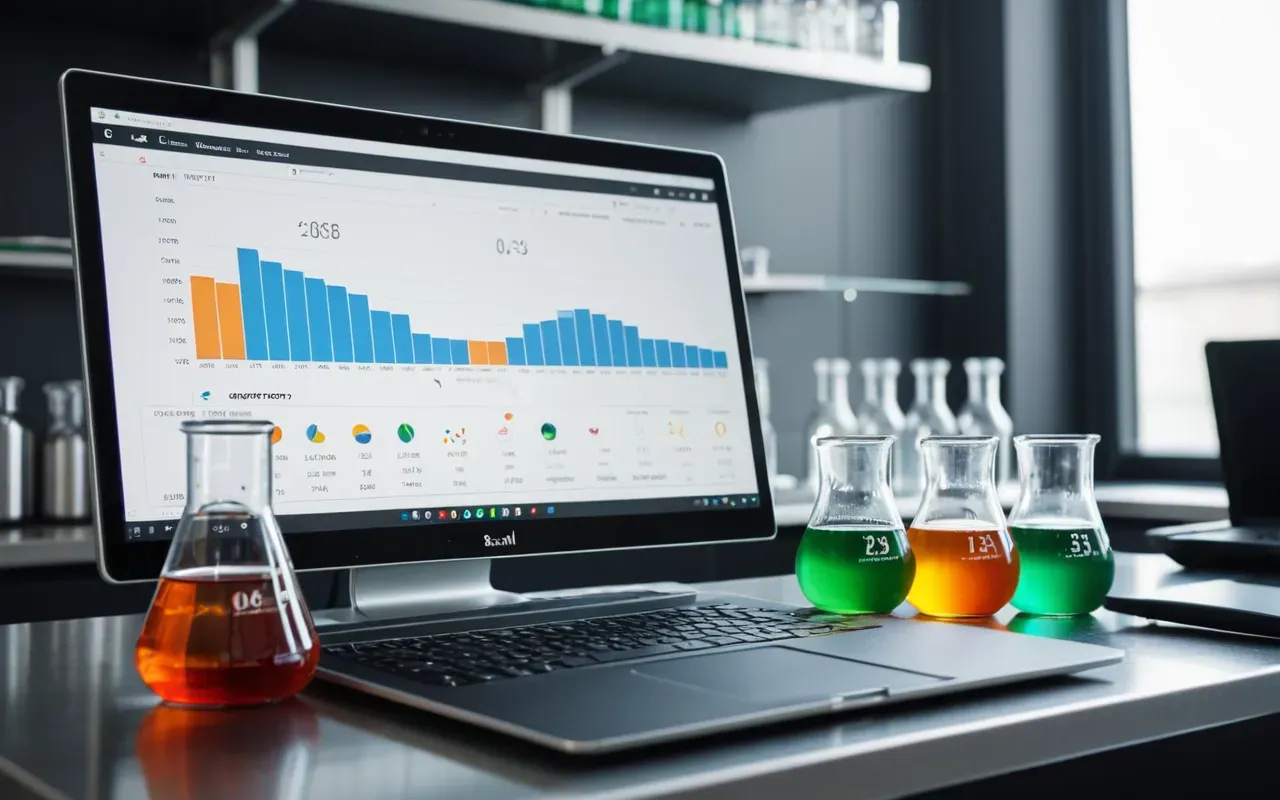
Let's talk about the silent killer of research. It is not a bad reagent. It is not a contaminated sample. It is bad data management. I have seen entire PhD projects collapse because the lab notebook was a mess. Or worse, because the digital records were inconsistent. Information systems is the study of how we manage this chaos.
In the Netherlands, we are seeing a huge push for open science. But open science requires robust digital infrastructure. If you are studying organic chemistry, your data is your product. The software that stores it, the algorithms that clean it, and the protocols that share it are all part of the scientific method. Ignoring information systems is like ignoring the glassware in a titration.
What Actually Counts as a Valid Study in This Field
Here's the thing. Information systems research does not always use randomized controlled trials. Sometimes it uses a case study of a single hospital. Sometimes it uses a simulation. This confuses chemists. We are trained to think that if it is not reproducible in a lab, it is not science. But in IT, reproducibility looks different. It is about code, datasets, and logic. Not beakers.
A valid study in this area must have a clear problem statement. It must describe the system being studied. It must explain the data collection method. And it must acknowledge the limitations. If you see a paper that claims to solve all healthcare data problems with a single algorithm, run. That is a press release, not a paper. If you are unsure, check out The One Question That Actually Matters in Health Research for a deeper look at validity.
How to Find the Right PDF Without Wasting Three Hours
You want to read a paper. You search Google. You find ten results. Five are paywalled. Two are from . One is a blog post. One is a press release. You are left with one actual academic article. This is the reality of academic search. The good news is that you can filter out the noise if you know the right terms.
Stop using broad keywords like 'health data'. It is too vague. Instead, use the specific system name. Look for 'HL FHIR interoperability' or 'EHR data governance'. These are the terms used by the people who build the systems. When you use their language, you find the technical papers. These papers are often open access because the funding bodies require it.

The Three Red Flags That Kill a Paper's Credibility
First, check the sample size. If a study claims that a new app improves patient outcomes, but they only tested it on nurses in one clinic, be skeptical. Second, look for the data source. Is it real clinical data? Or is it a synthetic dataset created by the authors? Synthetic data is great for testing code, but terrible for proving clinical effectiveness.
Third, and most importantly, check the conflict of interest statement. Who funded this? If it is a software company, read the results with one eye open. They have a product to sell. If it is a public university or a government body, the bias is usually lower. This is not paranoia. It is basic scientific literacy. If you are interested in how funding shapes outcomes, see Why pharma giants are quietly paying for your lab bench time.
A Practical Protocol for Reading One Paper in Twenty Minutes
Do not read from top to bottom. It is a waste of time. Start with the abstract. If it is confusing, close it. If it is interesting, go to the conclusion. Read that. Now you know where the author is going. Then, go to the introduction. Read the last paragraph of the introduction. This paragraph usually states the specific goal of the study.
Now, look at the figures. In information systems, the diagrams are the truth. The text explains the diagrams. If you can understand the flowchart, you understand the paper. Ignore the long paragraphs of methodology until you have a mental map of the system. This technique saves hours. I use it for every paper I review. It is not perfect, but it is fast.
Why Most Beginners Skip the Methodology Section
Because it is boring. I will admit it. It is dry. It is full of acronyms and statistical tests. But this is where the fraud hides. This is where the authors explain how they collected the data. If you skip this section, you are trusting their word. And in science, we do not trust words. We trust methods.
If you are a beginner, focus on the 'Data Collection' and 'Data Analysis' subsections. These are the parts that matter. The rest is often just academic padding. If you want to learn more about how to spot these sections quickly, check out 7 Questions That Ruin Most Natural Product Studies. The logic is the same, even if the field is different.
The Connection to Natural Products and Organic Chemistry
You might be wondering why a health science blog is talking about IT. It is because the data is getting too complex. When you synthesize a new polymer, you generate thousands of data points. NMR spectra, mass spectrometry data, reaction yields. Managing this data is an information systems problem. If your data is lost, the chemistry is lost with it.
I have seen researchers spend months re-doing experiments because they could not find the raw data from the first run. This is a tragedy. It is a waste of money and time. The solution is not better chemistry. It is better data management. Information systems provides the tools to make this happen. It is the infrastructure of modern science.
How Open Access Changes the Game for Students
In the past, you needed a university library to read a good paper. Now, you just need the internet. Open access means that the PDF is free. But free does not mean good. Many open access journals are predatory. They charge you to publish, and they do not peer review. This is a trap for young researchers.
Always check the journal's impact factor. If it is below ., be very careful. If it is above ., you are usually safe. But even a high impact factor does not guarantee quality. It only guarantees visibility. You still need to read the paper. You still need to check the methods. The open access model is a gift, but it requires a critical eye.
Common Myths About Information Systems in Health Science
Myth one: 'IT is only for engineers.' False. Every researcher who uses a computer is using information systems. You are part of the field. My mistake: 'Data is always objective.' Also false. Data is collected by humans. Humans have biases. The code that processes the data also has biases. These biases can skew the results. You must account for them.
Myth three: "AI will fix all data problems." Honestly, this is the most dangerous myth of the bunch. AI is a tool. It is not a brain. Feed it bad data and it will hand you bad answers — the classic garbage in, garbage out problem. AI can speed up the process, sure. But it cannot replace critical thinking. You still need to understand the data.
Why the 'Garbage In' Problem Is Worse Than You Think
In health data, the stakes are high. A wrong data point can lead to a wrong diagnosis. A wrong algorithm can lead to a wrong treatment. This is not a theoretical risk. It is a real danger. I have seen cases where a single typo in a database led to a patient receiving the wrong medication. This is a failure of information systems. It is a failure of safety.
So the solution is not better software. It is better protocols. It is better training. It is better communication between the scientists and the IT staff. This is a cultural shift. It is a mindset change. We need to see data as a living thing. It needs care. It needs attention. It needs respect. This is the core of information systems.
The Future of Research in a Digital World
The next decade will be defined by data. Not by molecules. Not by cells. By data. The scientists who win will be those who can manage this data. They will be those who can ask the right questions of their databases. They will be those who can see the patterns that others miss. This is the new skill set. This is the new literacy.
You do not need to become a programmer. You do not need to learn to code. But you do need to understand the basics. You do need to know how your data is stored. You do need to know how it is shared. You do need to know how it is protected. This is the foundation of modern science. And it is within your reach.

What This Means for Your Next Project
Before you start your next experiment, think about the data. How will you store it? Who will have access? How will you share it? These are not IT questions. They are science questions. If you cannot answer them, your project is at risk. Take the time to plan. Take the time to learn. It will save you pain later.
Information systems is not a separate field. It is a tool. It is a language. It is a way of thinking. Learn it. Use it. Respect it. And you will find that your science gets stronger. Your results get cleaner. Your impact gets bigger. This is the promise of the digital age. And it is a promise we can keep.
Frequently Asked Questions
What is the difference between information systems and computer science?
Information systems focuses on the human and organizational aspects of technology use. Computer science focuses on the algorithms and hardware. In health science, information systems is usually more relevant because it deals with data management, user experience, and workflow integration. It is about making technology work for people, not just making it work.
How can I find open-access papers on health informatics?
Use databases like PubMed or IEEE Xplore. Filter your search by "Free Articles" or "Open Access". Look for journals that are funded by public bodies. These are usually open access. You can also check university repositories. Many researchers upload their papers there for free. This is a great way to find high-quality, free content.
Why is data management so important in polymer research?
Polymer research generates massive amounts of data. Reaction conditions, yields, spectra, and characterization results all need to be stored and organized. If this data is lost or inconsistent, the research cannot be replicated. Good data management ensures that your findings are reliable and can be shared with the scientific community.
Can I use AI to summarize research papers for me?
Yes, but with caution. AI can help you find key points and summarize long texts. However, it can also miss subtle nuances or make mistakes. Always verify the AI's summary against the original paper. Use AI as a tool to speed up your reading, not as a replacement for your critical thinking. The final judgment is always yours.



Comments ()