The $20 Million Gap You Ignore Because Your Lab Smells Like Pine
The quiet crisis hiding in your lab notebook
You know that feeling. The compound works in the assay. It looks perfect on paper. But three months later, a reviewer asks for one more control experiment you never ran.
That is where the real value of a structured graduate program lies. Not in the glamour of discovery, but in the unsexy discipline of proof.
I have seen too many brilliant natural product papers collapse because the author skipped a single structural confirmation step. It is not about genius. It is about habit.
Why the organic chemistry of natural products still matters
Natural products are not a fad. They remain the largest single source of new drug leads in modern medicine. Over half of all approved small-molecule drugs trace their origin to a plant, fungus, or marine organism.
And yet, the field is underfunded and undervalued. Most grants now favor computational modeling or synthetic biology over the slow, painstaking work of isolating a molecule from bark or seaweed.
That gap is exactly what programs like the one at Syracuse University's ESF School of Forestry and Environmental Sciences are designed to fill. They teach students not just how to find a molecule, but how to prove it works.
The three core pillars are isolation and characterization of new natural substances. Synthesis of improved routes to known compounds. And the study of how molecular structure dictates biological response.
The three pillars of meaningful research
Isolation is the starting point. You take a crude extract and separate it into pure compounds using chromatography techniques like HPLC or preparative TLC.
But isolation alone is not enough. You must synthesize the compound in the lab to confirm its structure and ensure you are not dealing with a degradation artifact.
This is where the organic chemistry of natural products becomes an art. You are not just copying nature; you are learning its logic and applying it to new problems.
The third pillar is biological response. This is the part most students find frustrating but essential. A molecule that looks beautiful in a mass spectrum means nothing if it does not interact with its target.
The instrumentation that separates good research from great research
Access to state-of-the-art analytical instrumentation is a non-negotiable requirement for serious natural products research. Without it, you are guessing.
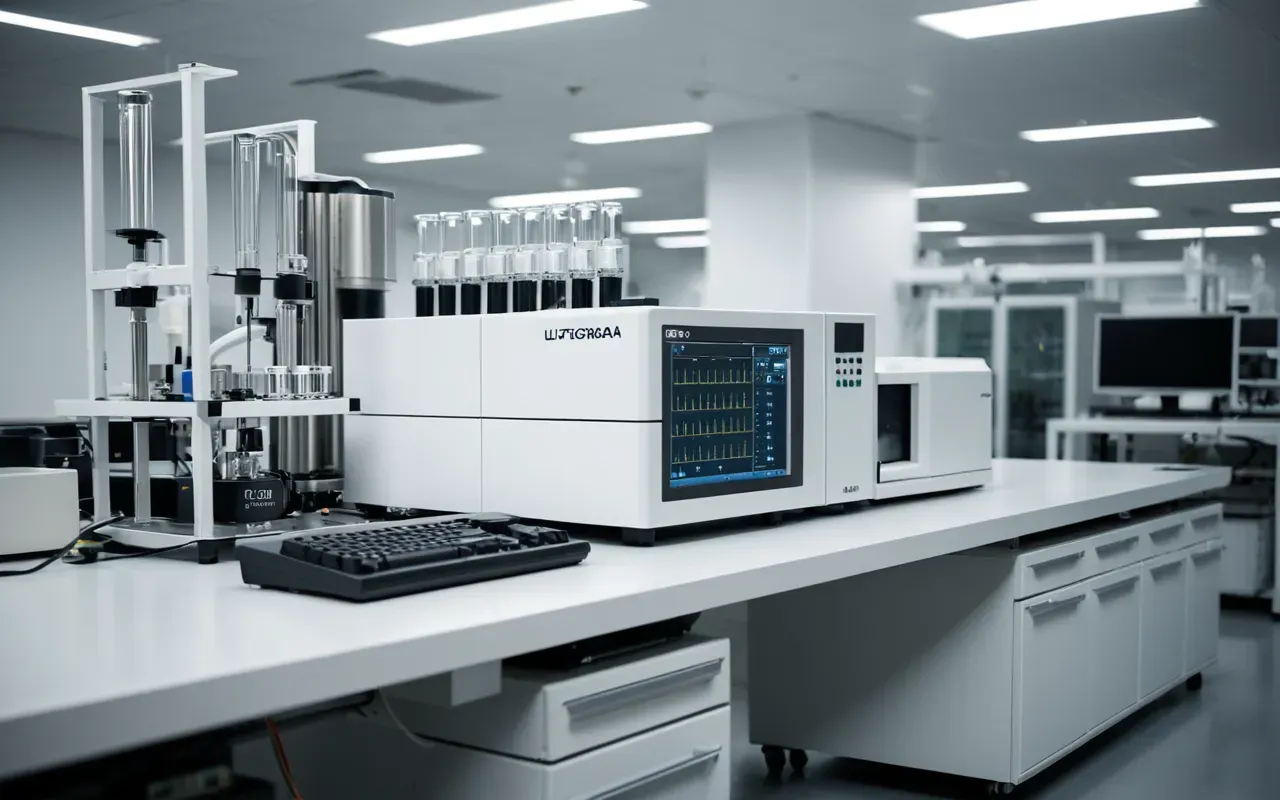
The program at ESF provides access to an 800-MHz NMR spectrometer and two high-resolution Orbitrap mass spectrometers equipped with gas or liquid chromatographs.
These are not just expensive toys. They are the difference between a hypothesis and a conclusion. An 800-MHz NMR can resolve overlapping peaks that would be impossible to interpret on a lower-field instrument.
The Orbitrap mass spectrometers provide the resolution needed to distinguish between compounds with identical nominal masses. This is critical when working with complex natural mixtures.
What students actually learn in the lab
Graduate students take coursework in mechanistic organic chemistry and synthetic organic chemistry. PhD students also study physical chemistry and the specific challenges of natural products.
They learn separation techniques in depth. Chromatography is not just a skill; it is a language for understanding how molecules behave in complex mixtures.
They also learn statistical methods of analysis. This is the part that surprises most students coming from pure chemistry backgrounds.
If you are serious about structure-response relationships, statistics is not optional. It is the tool that tells you whether your data means something or just noise.
The faculty who shape the next generation of chemists
Professor Jose L. Giner focuses on organic and natural products chemistry with a special interest in sterol synthesis. His work bridges the gap between synthetic methodology and biological application.
Professor Nicholas C. Pflug works on environmental chemistry with a focus on aquatic systems and chemical ecology. His research includes the study of algal toxins and semiochemicals.
Chemical ecology is where organic chemistry meets biology in the most direct way possible. It asks not just what a molecule is, but why it exists and how it communicates.
The emeritus faculty also contribute to the field's legacy. Gregory L. Boyer's work on plant and algal biochemistry laid important groundwork for understanding environmental monitoring systems.
The financial reality of pursuing a PhD in natural products
Students are typically supported through research assistantships, teaching assistantships, and fellowships. This is standard for PhD programs in the sciences.
But let's be honest about what that means. You are trading your time and intellectual energy for a modest salary and the promise of expertise.
In a field where grants are increasingly competitive and industry positions are shifting toward computational roles, the value of hands-on natural products expertise is harder to quantify.
Yet it remains one of the most intellectually rewarding paths in chemistry. You are working at the intersection of biology, environment, and medicine.
What this means for your next career move in health science
If you are considering a graduate program in natural products chemistry, look beyond the prestige of the institution. Look at the culture of rigor.
The best programs do not just teach you how to make a molecule. They teach you how to defend it.
In an era where AI can predict protein structures in minutes but cannot replicate a week of tedious purification work, the human element is not obsolete. It is essential.
The next breakthrough in health science will likely come from a compound that someone carefully isolated, synthesized, and validated. Not from an algorithm.
Comments ()