The Secret War Over Scientific Data Means Your Next Breakthrough Might Never Happen

The Data Gold Rush Nobody Warned You About
We keep hearing about AI writing poems or coding apps. That's the noise. The signal is quieter. Much quieter. And honestly, it should keep you awake at night. I've been watching the shift from the sidelines of Dutch health research, and the trajectory is unsettling.
Big tech is circling the scientific data. Not just reading it. Consuming it. Locking it away. The story coming out of RIKEN in Japan isn't just about a new program called AGIS. It's a warning shot across the bow of open science. Program Director Makoto Taiji is saying what many of us suspect but rarely admit out loud.
Textual data is running out. The internet is exhausted. The next feast is scientific data. If overseas giants grab the spoons and forks before we secure the pantry, the future of health innovation could vanish behind paywalls. Look at the implications for our local work in polymers and natural products.
Foundation Models Are Rewriting the Rules of Discovery
Here's the thing most people miss. AlphaFold changed the game for protein structure prediction, sure. But the real revolution isn't the prediction. It's the foundation model approach. Taiji points to Meta's ESMFold, released in 2022, which matched AlphaFold's performance at blazing speeds by using a protein language model.
Think about that for a second. We're treating amino acid sequences like sentences. Twenty types of amino acids create infinite functions, just like words create infinite sentences. AI is learning the grammar of biology. This isn't just a tool upgrade. It's a fundamental shift in how we understand life itself.
But the danger lies in who controls the grammar book. If a single corporation owns the foundation model for protein folding, they effectively own the key to drug discovery. For researchers in the Netherlands focusing on organic chemistry and natural products, this is a nightmare scenario. We need these models to be public goods.
Taiji emphasizes that we need large-scale foundation models for many areas of science. Not just biology. Materials science. Polymers. If we don't build them now, someone else will. And they won't share. The AGIS program at RIKEN is betting everything on creating infrastructure that keeps science open. It's a race against time.
The Hidden Cost of Hoarding Scientific Knowledge
Science has always thrived on free discussion. Collaboration. The messy, beautiful exchange of ideas across borders. That's how breakthroughs happen. Taiji is deeply concerned about the possibility that access to scientific knowledge becomes closed off. Large overseas tech companies have the money to build these systems.
If important knowledge concentrates in the hands of a few, innovation stalls. We've seen this with software patents. Imagine that happening with the fundamental models of health. A researcher in a university lab in Utrecht might have a brilliant idea for a new polymer scaffold, but without access to the underlying AI infrastructure, they're stuck.
This isn't a hypothetical. The trend is already here. The United States launched the Genesis Mission in 2025 to integrate AI and science. Japan and the US agreed to cooperate on this in June 2026. RIKEN is positioning itself as a central hub. Europe, and the Netherlands specifically, needs to wake up to this geopolitical reality.
We can't just watch from the sidelines. If we want to maintain our reputation for excellence in health sciences, we have to ensure our researchers aren't locked out. The goal must be a jointly built, open scientific foundation. RIKEN is trying to lead that charge. We should be supporting that vision, not competing against it in silos.
Why Your Failed Experiments Are Suddenly Priceless
So, what does AI actually want? It's not the polished data in your published paper. It's the mess. The failures. The anomalies. Taiji notes a severe shortage of data suitable for training capable AI. Scientists collect data to understand specific phenomena. AI needs comprehensive data, including results that didn't work.
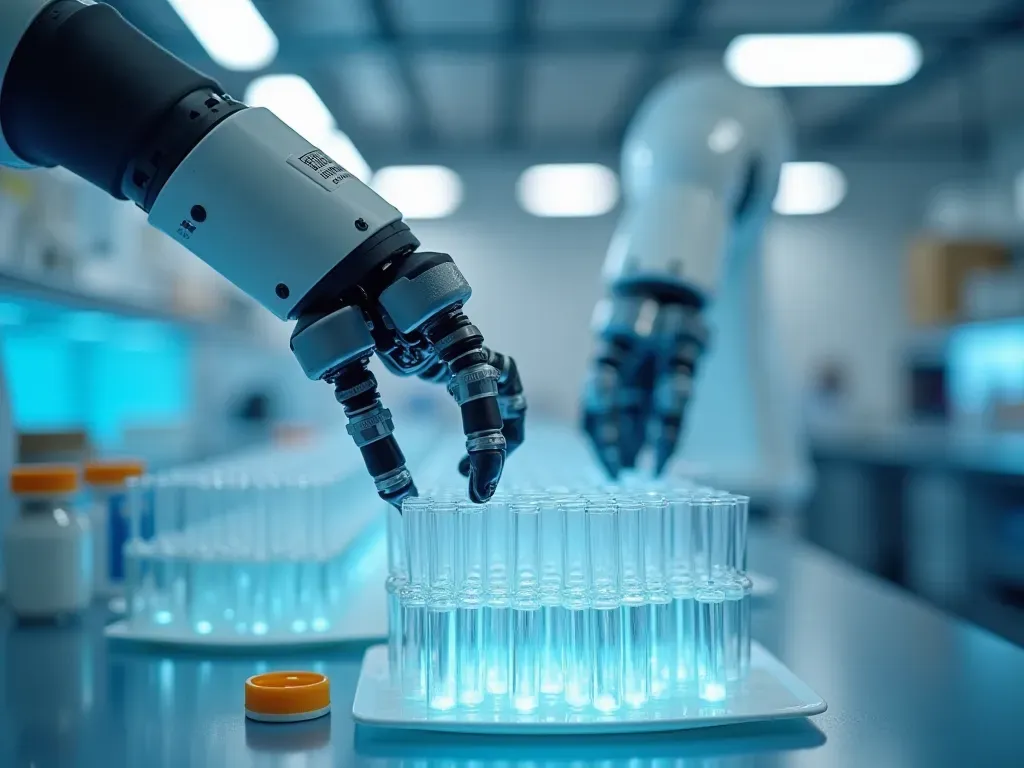
This changes everything about how we run labs. If you throw away your failed polymer synthesis results, you're throwing away the training data that could teach an AI what doesn't work. That's half the battle. AGIS is placing huge emphasis on automating experiments using robots to capture this multimodal data.
Imagine a robot running cell experiments. It captures gene activity, protein production processes, and microscopic video all at once. The AI learns the relationships between these different forms of information. Humans can't see those connections. We're too focused on the hypothesis. The machine sees the whole picture.
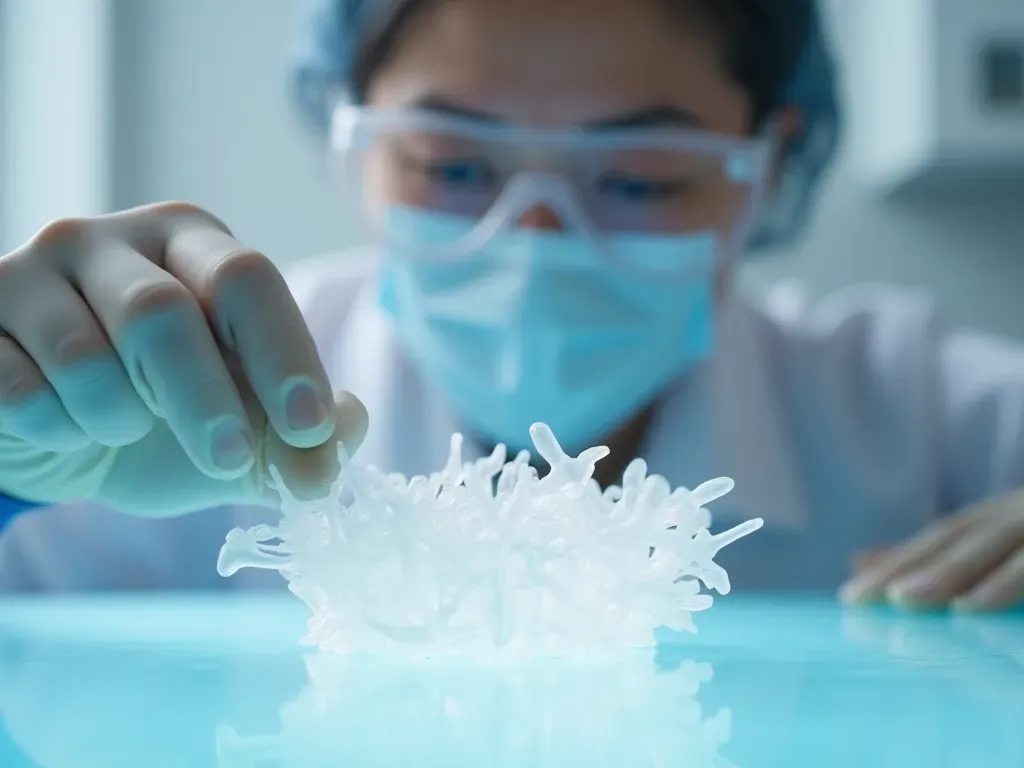
For the Dutch community, this is critical. Our strength in natural products and polymers relies on nuanced experimental details. If we don't automate our data capture, we'll have starved AI models. The models trained on incomplete data will hallucinate. They'll give us wrong answers. And that could cost lives in health applications.
The Four Pillars of the AGIS Strategy
Life Science Models That Predict Behavior
AGIS is pursuing four distinct projects. The first is developing life science models to predict the behavior of cells and organisms. This goes beyond static structure. We're talking about dynamic behavior. How does a cell react to a new compound? How does a tissue respond over time?
This is where the rubber meets the road for health research. If we can predict organism behavior accurately, we reduce the need for animal testing. We accelerate clinical trials. But again, the model must be accessible. If this capability sits behind a corporate firewall, we lose the benefit. The AI revolution in scientific research could rewrite the future of health, but only if it remains open.
Materials Models for Polymers and Physics
The second project targets materials and physical properties. This is directly relevant to our focus on polymers. Exploring new polymers with AI could yield materials with unprecedented strength or biocompatibility. Taiji mentions exploring new polymers explicitly. This is a direct hit for our sector.
Think about drug delivery systems. Biodegradable implants. Smart materials that react to bodily signals. All of these rely on polymer science. An AI model that can predict material properties from atomic structure would be transformative. But it requires massive datasets of material properties. Do we have them? Probably not. We need to start collecting.
I've seen researchers dismiss AI as a black box. That's a mistake. The models are only as good as the data we feed them. If we contribute high-quality polymer data to open repositories, we shape the models. We ensure they work for our applications. Innovative polymers are already transforming health research, and AI will supercharge that trend.
Automated Infrastructure and Robotic Labs
The third pillar is the infrastructure itself. Automated experiments using robots. This isn't just about speed. It's about consistency. Robots don't get tired. They don't have bad days. They can run thousands of variations of an experiment simultaneously. This generates the volume of data AI craves.
RIKEN has recently installed laboratory automation systems for polymer science. This is concrete action. They aren't just talking. They're building. The Netherlands has world-class labs. We need to integrate similar automation. If we wait, we'll fall behind. The data gap will widen. And once it's wide, it's hard to close.
Computational Power for the AI Era
Finally, there's the computing power. RIKEN introduced its latest supercomputer in March 2026. It's named RIKYU. This machine is geared specifically toward AI for Science. Taiji mentions that RIKEN has computational resources capable of handling massive data. Japan is leveraging this strength.
We need comparable access. Not necessarily building our own supercomputer, but ensuring our researchers can tap into existing European or global resources. The barrier to entry for AI research is rising. Compute is the new currency. If we can't afford the currency, we can't participate in the economy of discovery.
Connecting Disciplines to Save Science
Taiji's background is fascinating. He worked on MDGRAPE-4A, a supercomputer for protein simulation. He bridged experimental physics, drug discovery, and machine learning. He understands that silos kill innovation. AGIS aims to connect researchers across fields. Biologists need to talk to computer scientists. Chemists need to talk to data engineers.
RIKEN's strength is that experts from different fields are in neighboring labs. AGIS leverages this. In the Netherlands, we have similar clusters. We should be fostering these connections aggressively. The best health breakthroughs will come from the intersection of natural products, AI, and polymers. Not from isolated departments.
Successful model development requires close collaboration. Taiji stresses this point repeatedly. It's not enough to hire an AI specialist. The domain experts must be involved in building the models. They know what questions matter. They know what data is trustworthy. Without them, the AI is just guessing.
The Stakes for the Dutch Scientific Community
Why does this matter to you? If you're a student, your career will be defined by AI. If you're a professor, your grant proposals will need to account for data strategy. If you're in industry, your R&D pipeline depends on access to these models. The window for action is closing.
We risk becoming consumers rather than creators. If we rely on foreign AI models for our research, we lose sovereignty over our scientific output. We become dependent on the whims of tech companies. AI is reshaping health research with both promise and threats, and we must navigate this carefully.
The Netherlands has a proud history of open science. We champion data sharing. We support collaborative research. That culture is our best asset. We need to weaponize it. We need to build open repositories for polymer data, natural product interactions, and health outcomes. We need to feed the global models with our data.
When we contribute, we gain influence. We help shape the models to serve our needs. We ensure that the AI understands the nuances of our work. It's a collective defense. No single lab can do this alone. We need a national strategy. We need to align with initiatives like AGIS and the Genesis Mission.
What Happens If We Ignore the Warning
Let's be blunt. If we ignore this, we lose. The implications are severe. Imagine a future where a life-saving drug is discovered by an AI model owned by a company that charges exorbitant fees for access. Imagine researchers being blocked from publishing because their data conflicts with a proprietary model's predictions.
That scenario isn't science fiction. It's the logical endpoint of current trends. Taiji's concern is valid. Science has traditionally advanced through free discussion. We need to work to ensure that environment continues. It's not just about ideals. It's about practical survival of the scientific method.
The competition is international. The collaboration is also international. RIKEN is seeking partners. The US and Japan are cooperating. We have a chance to join this effort. We can contribute our expertise in health and materials. But we have to move fast. The infrastructure is being built right now. The data is being collected right now.
Taking Action in Your Own Lab
What can you do today? Start by auditing your data. Are you archiving failed experiments? Are you storing multimodal data? If not, fix that. Implement systems to capture everything. Use standardized formats that AI can digest. This simple step makes your lab future-proof.
Engage with AI specialists. Don't wait for them to come to you. Reach out. Ask questions. Learn how foundation models work. Understand the limitations. Researchers are already panicking about AI ranking science, but panic isn't productive. Education is.
Advocate for open science. Push your institutions to support open repositories. Demand access to computational resources. Voice the concerns about data monopolies. Taiji is doing this on a global stage. We need local champions too. Speak up in meetings. Write to policymakers. Make it clear that open science is non-negotiable.
The future of health science is being written in code. The code is being trained on data. The data is being hoarded. We have the power to change that. But only if we act together. The AGIS program shows what's possible. It's a blueprint. Let's follow it. Let's build a future where science remains open, accessible, and truly transformative.


Comments ()